For Wendell Berry, My North Star
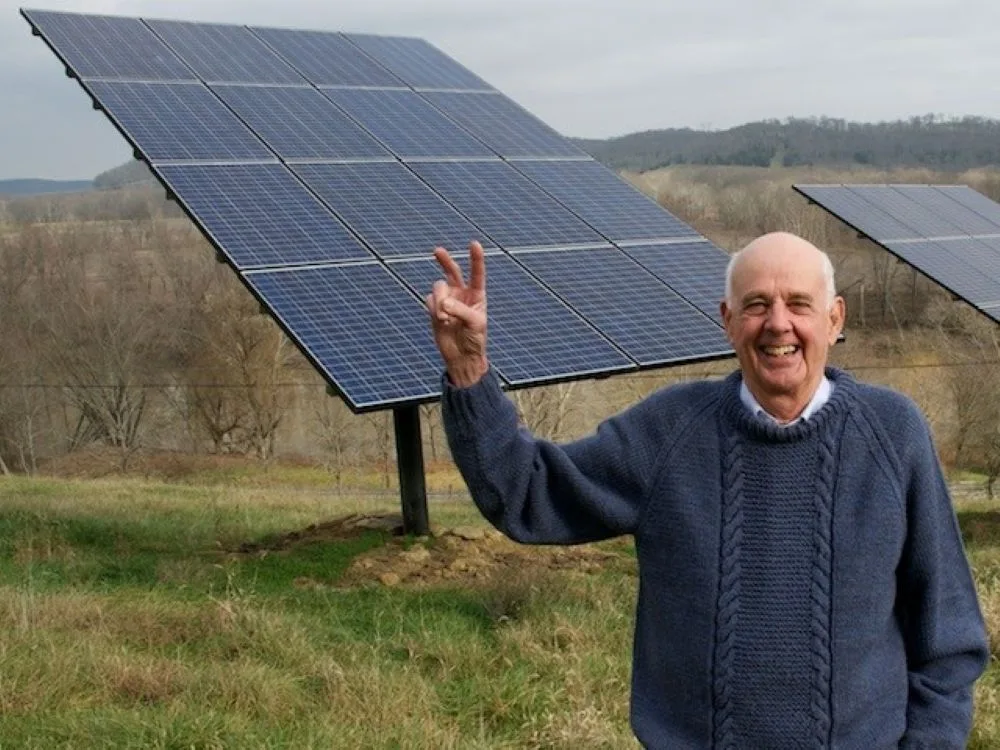
“Stay away from anything that obscures the place it is in. There are no unsacred places; there are only sacred places and desecrated places.” — Wendell Berry
We sat on his porch by the Kentucky river, and I can still hear to this day his voice. Resonant. Deliberate. Pointed yet kind. The voice came with a Kentucky drawl and it just held your attention.
The man, too, spoke slowly in measured and whole sentences. Somehow, his storytelling managed to address the seriousness of the ecological crisis in an understandable way. With humility, not judgement.
His voice sounded as true as the flight of a sand hill crane. Or as strong as a willow. It was a voice unburdened by cliches. One that rejected machine thinking, that honoured the mysteries of faith. A voice, both poetic and prophetic, that was ultimately shaped and informed by the memories, work, tragedies and stories of generations of the hill dwellers in Henry County, where he was born. Uncompromising.
That was Wendell Berry, the great American poet, conservationist and essayist. He died at the end of August at the age of 92 at his home in Port Royal, Kentucky.
By any measure he was a remarkable warrior against the excesses of modernity, and a peaceable one at that. The American environmentalist and author Bill McKibben called him “ the prophet of responsibility ,” and Berry occupied that ground like an oak tree. He never talked much about identity and rights. What mattered to him was character, and that is something shaped and informed by how one honours one’s responsibilities to one’s community and place.
“I think life ought to have some pleasure on it,” Berry once told me. “And pleasure, to me, comes from contact with elemental things: other people, plants, animals, community life, useful work.”
Berry “sort of” farmed 125 acres of marginal land and taught English for a time at University of Kentucky. He quit when it started taking money from coal companies that painted the abomination of mountain-top removal as an economic necessity.
In between, he wrote poems about the wonder and difficulties of marriage, work and life. He also penned some of the most critical and essential essays about the decline of American empire, and he did so decades before the Trump revolution made the spiritual rot as obvious as roadkill.
His writings never offered easy solutions or pat answers. Nor did he trade in the commodity of last words.
Instead, he doggedly outlined our difficult predicament: cultural survival in materialist society enthralled by its ever-evolving thirst for ecological destruction.
He defended the small family farm because he liked to eat good food and live in a working democracy. He understood the connections between the two, and he wanted more Americans to connect the dots.
Fundamentally, he recognized that if we don’t have lots of independent people informed by tradition and the experience of living locally, then we’d be nothing more than slaves to machines. Or sales pitches. And he was right about all of it.
For me, at least, Berry’s death demands more than a moment of reflection.
5News aggregated this summary from the outlet’s public feed. The full article, with all the context, is on thetyee.ca — the content belongs to The Tyee.