TTC’s first subway barrier installation renews criticism over plan
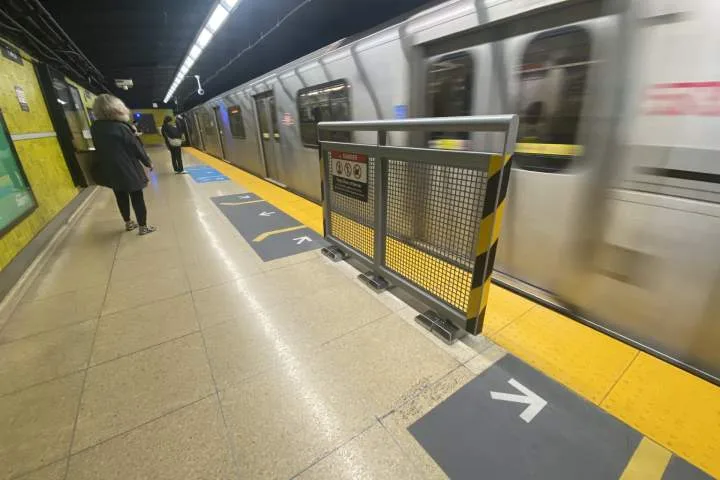
A new pilot program aimed at improving safety on subway platforms has begun to take shape at TMU station, but the program already had its fair share of skeptics before the TTC installed a single steel barrier at the busy terminal, yielding a slew of fresh criticism.
At a spring press conference, Mayor Olivia Chow stood alongside TTC leadership to announce improvements were on the way to help improve safety and increase ridership. Along with investments to boost staffing and security complements, along with more homelessness and mental health outreach workers, Chow said platform barriers would soon be installed at TMU Station (formerly Dundas).
But excitement about the news was quickly replaced by disappointment when the details of the barriers were revealed to be steel fences with gaps for doors, rather than floor-to-ceiling doors often seen at modern stations.
Chow and TTC CEO Mandeep Lali argued the steel barriers were used in New York City’s subway system and, in addition to being more cost-effective than platform edge doors, they were still effective.
Now, the first barrier has been installed at the subway station in the pilot that’s expected to cost up to $2 million. Passengers, advocates, and many others have all weighed in on the measure many feel will do little to actually prevent trespassing or prevent people from falling on the tracks.
Installing the doors at all subway stations would cost $4.1 billion, Chow’s campaign said referring to TTC figures, at an average of $55 million for each station.
Among the critics is Coun. Josh Matlow, who argues the money would be better used if it went into installing platform edge doors where they’re needed the most. “They are performative, but they aren’t a good performance,” he said.
The installation, just as Toronto’s municipal election is about to swing into a flurry of action, was also seized on by opponents to Olivia Chow. They included mayoral candidate Brad Bradford, who has posted multiple social media videos blasting the decision.
A separate statement from Bradford’s campaign argues floor-to-ceiling doors should be the only course of action, even going so far to say they would pay for themselves by avoiding deaths, injuries, and reduced delays.
But it’s the price tag for the platform doors that the incumbent mayor argued was her reason for pressing ahead with the pilot. Chow has also voiced her preference for the top tier option, but she has said it would only be possible with funding assistance from upper levels of government. At a press conference earlier this year, Bradford said provincial and federal money would likely be needed.
Transit advocate Andrew Pulsifer with the group TTC Riders is also in favour of the top tier option. But he said that’s only going to happen when Ottawa or Queen’s Park buy-in.
“For both state-of-good repair or platform-edge doors, we can only really fix those issues if higher orders of government step in,” he said.
“Just being able to do them across the board, out of the gate, is a little naive,” Pulsifer said.
While it’s easy to dunk on the steel gates, the transit advocate did say that transit users shouldn’t be so quick to write them off.
5News aggregated this summary from the outlet’s public feed. The full article, with all the context, is on globalnews.ca — the content belongs to Global News.