Swedish election could see far-right party join government for 1st time
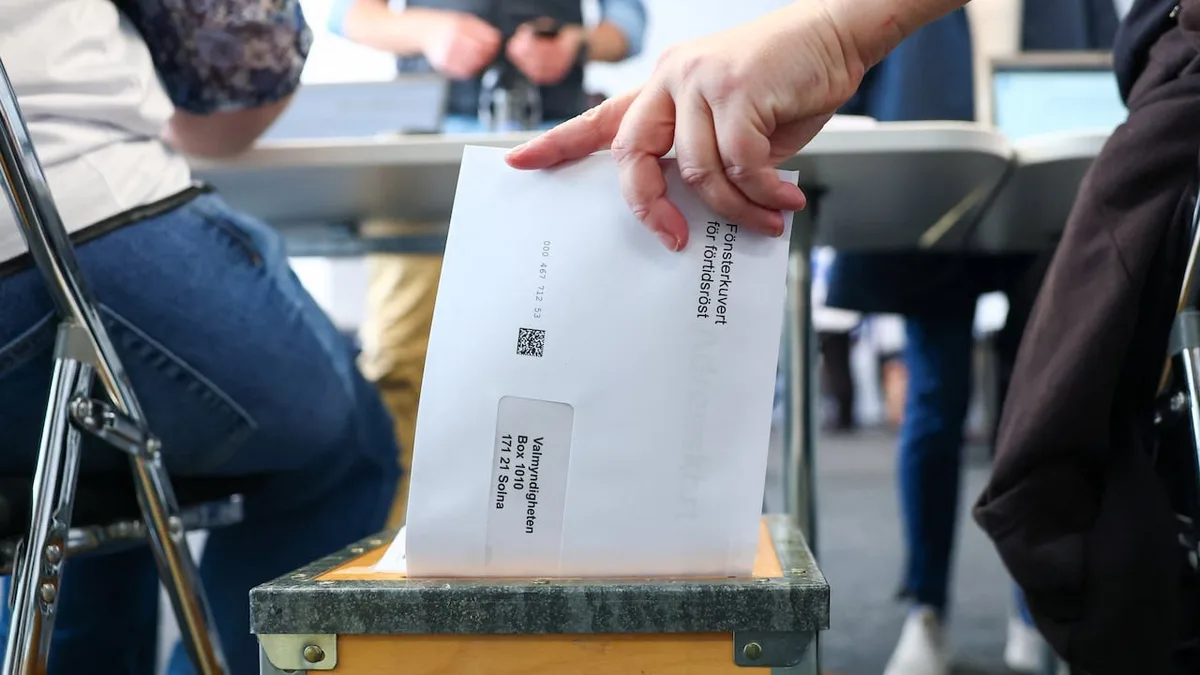
Swedes vote in an election on Sunday that will either bring a far-right party into government for the first time or shift the country back towards the liberalism it has long been known for.
Sweden's centre-left opposition holds a narrow lead over the ruling right-wing bloc ahead of a Sept. 13 election for parliament, pointing to a likely change of government, several opinion polls have shown this week.
But Prime Minister Ulf Kristersson, who has trailed in opinion polls throughout his four years in office, has been catching up in the final weeks of campaigning, with rival Magdalena Andersson and her Social Democrats losing ground.
Supporters of the right-wing bloc say its policies have helped curb gang violence and cut immigration dramatically, and that a victory would amount to a public endorsement of that approach and more in the same vein in the years ahead.
"We can unify parties, voters and issues into joint action. That's why we get things done," Kristersson, who has pledged to bring the far-right Sweden Democrats into government if his bloc wins, told reporters in parliament this week.
Critics counter that the agenda is undermining civil liberties while forcing immigrants to conform more closely to Swedish cultural norms or leave the country, urged on by both carrot and stick.
"We've become a harder society, a quieter society, but also a poorer society as we've had growth far below our potential and where households see their pay checks buy less and less," Andersson told Reuters.
Right-wing bloc wins narrow majority in Sweden, marking major political shift
"Our country has based its strength on sharing in each other's achievements and that we stick together when things are hard."
Polling stations in the EU member state of 10 million people, which joined NATO after Russia's full-scale invasion of Ukraine, open at 8 a.m. local with exit polls due soon after they close at 8 p.m.
Electoral success for the Sweden Democrats would be welcomed by Europe's rising far-right parties, boosted by a significant win in a German state election this month by the anti-immigrant Alternative for Germany.
The right has already agreed to form a four-party government led by Kristersson if they win, while Andersson's path to power is more uncertain.
Far-right victory in German state expected to send shockwaves throughout the world
The election could ultimately be decided by whether the Liberals surpass the 4 per cent threshold to win seats in parliament, bolstering a right wing that includes Moderates, Christian Democrats and, since being invited by Kristersson earlier this year, Sweden Democrats.
5News aggregated this summary from the outlet’s public feed. The full article, with all the context, is on www.cbc.ca — the content belongs to CBC News.