Will BC’s Land Zoning Plan Protect More Forests?
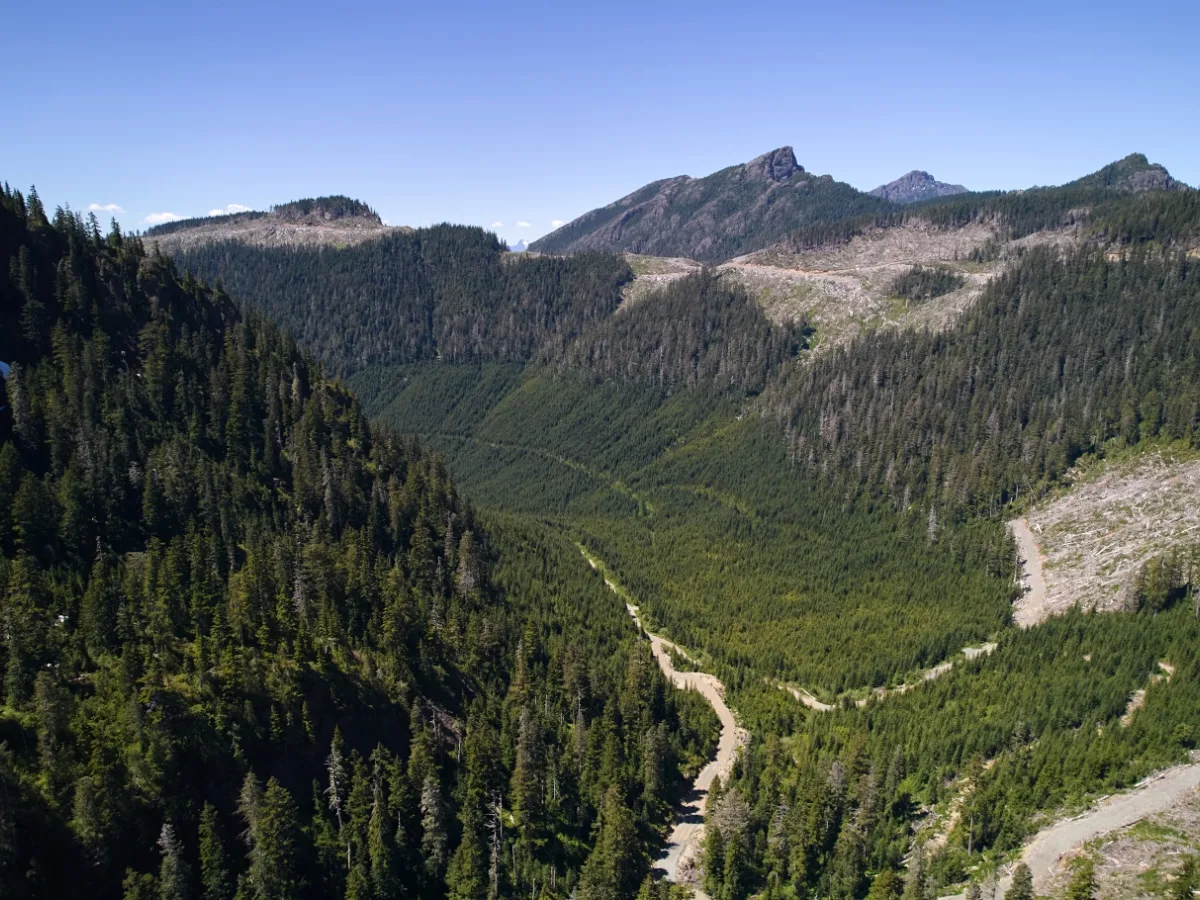
As the provincial government advances plans to carve British Columbia’s lands into zones where logging and other industrial activities are permitted or barred, a former longtime public servant says he is struggling to not be cynical about what could lie ahead.
In August, The Tyee broke the news that the provincial ministries of Forests and Water, Land and Resource Stewardship were proposing to divide B.C.’s vast and spectacularly diverse lands into “working forest,” “multiple-use” and “conservation and protection” zones. The details were included in a leaked internal government email .
The zoning exercise is happening as Premier David Eby tells Forests Minister Ravi Parmar to find more trees for companies to log in order to meet a logging target of 45 million cubic metres per year.
Forest ecologist Andy MacKinnon, who worked as a research scientist in the Forests Ministry for 30 years, said he worries that the “ Path to 45 ” initiative will drive the zoning plan. That initiative largely focuses on expediting logging approvals and increasing logging rates.
MacKinnon worries that if the zoning plan prioritizes logging, land placed in the proposed conservation and protection zone might be focused in extremely steep terrain or alpine areas where forests have little or no commercial value.
“It’s entirely possible to protect large percentages of an awful lot of the province without having any timber supply impact whatsoever,” MacKinnon told The Tyee. “A cynical man would suspect that that’s what the government is up to.”
The Tyee asked Parmar why the zoning process is needed when both his ministry and the logging industry have operated for decades on the understanding that there is a “ timber harvesting land base ,” or THLB, in the province where logging activities are permitted.
Parmar said that while the THLB continues to exist, it “is not the THLB of yesterday,” due to the surge in the number of wildfires and extensive insect attacks that have occurred in the province in recent decades.
He said that as the zoning process unfolds, a guiding principle will be that there is “no net loss” in either the working forest or the area of land that is zoned as conserved or protected.
Parmar said a zoning process for the province’s forests is not a new idea and was contemplated by Gordon Campbell’s BC Liberal government in the early 2000s.
Establishing a working forest zone would bring greater certainty to the forest industry in terms of where it is approved to operate and would reduce paperwork by clearly defining broad areas in which companies could operate over time, Parmar said.
“I don’t see why they should be submitting cutting permits block by block,” he said.
Randene Neill, the province’s minister of water, land and resource stewardship, said that more old-growth forests will be placed in the proposed conservation and protection zone and that the upcoming zoning decisions will be guided by advice the government received six years ago from professional foresters Al Gorley and Garry Merkel.
That advice took the form of a 72-page report calling on the government to make a “ paradigm shift ” in its management of old-growth forests.
5News aggregated this summary from the outlet’s public feed. The full article, with all the context, is on thetyee.ca — the content belongs to The Tyee.