Can Carney fast-track a pipeline while also protecting endangered orcas?
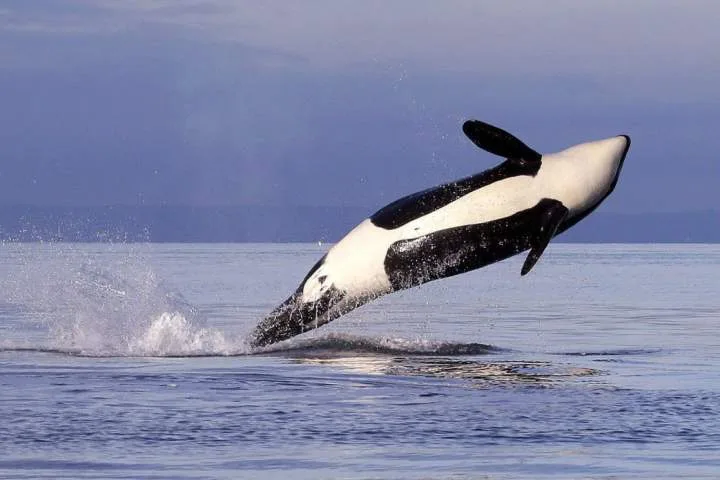
The federal government says it’s committed to protecting the endangered southern resident killer whale population while also fast-tracking a new West Coast oil pipeline and other infrastructure projects that could threaten the orcas’ survival.
And the British Columbia government has said it recognizes, along with Ottawa, the need to protect these whales when it dropped its opposition to the pipeline last month.
But environmentalists are doubtful that a proper balance can be struck between the environmental and economic considerations at play, pointing to sustained evidence that the whales’ already-small population continues to decline and will be put at further risk by additional tanker traffic in the Salish Sea.
“I see no way for them to be able to thread that needle,” Anna Johnston, a staff lawyer at West Coast Environmental Law, said in an interview.
“They’re putting the cart before the horse, and that’s just going to end up in a crash.”
The federal government quietly gave notice over the August long weekend that it intends to designate the proposed new pipeline from Alberta to B.C. as a “national interest” project — the first such designation under the Building Canada Act.
The law passed last year allows such projects to get special treatment — such as exemptions from certain environmental laws — to help move them toward final approval. Those laws include the Fisheries Act, the Species At Risk Act and the Impact Assessment Act.
That has raised concerns that the government could override a finding that the pipeline puts the southern resident killer whales at potential risk of harm, if an assessment reaches such a conclusion.
Less than 75 of these orcas remain in the Salish Sea, an area that includes the Roberts Bank port terminal where the new pipeline would terminate. A proposal to expand the port to allow for increased international shipping capacity has also been referred to the Major Projects Office.
Government assessments and independent reports by environmental groups like the David Suzuki Foundation dating back several years agree that underwater noise from vessels, including commercial tankers, is among the top threats to survival for the killer whales, which rely on echolocation to hunt and travel.
“This is not a new species that’s at risk,” said Hussein Alidina, the lead specialist for marine conservation at World Wildlife Federation Canada.
“The threats that these whales have faced … over these two to three decades have not been reduced, and the conditions have not been made conducive to the recovery of the whale.
5News aggregated this summary from the outlet’s public feed. The full article, with all the context, is on globalnews.ca — the content belongs to Global News Canada.