The art of inflicting pain: How to select targets for Canada's counter-tariffs
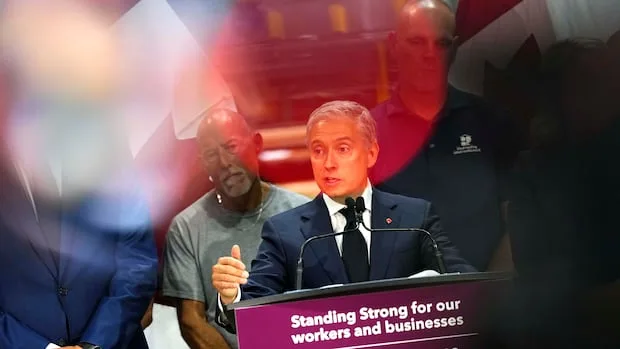
Like a fox trying to bring down a moose, Canada's retaliation against the latest U.S. tariffs is a classic case of asymmetrical warfare.
That's because the U.S. economy is about 12 times larger than Canada's, says economist Trevor Tombe.
"It's incredibly hard for a small country to move the needle in aggregate in the United States. That's why it's important to zoom in on specific states where possible. But even in these heavily affected states, the effects are small," he said.
Not only is the U.S. much bigger than Canada, it's also much less dependent on international trade, because its internal market consumes so much of what it produces.
And so with its counter-tariffs set to take effect after Labour Day , Canada must maximize every conceivable advantage if its tariff jiu-jitsu is going to throw its heavier opponent off balance.
But it's not as simple as just looking for maximum pain points in the U.S.
"You have to be very conscious of limiting self harm against our own importers and exporters," said Brian Clow, who was chief of staff to International Trade Minister Chrystia Freeland during Canada's last tariff war with the U.S. and chief adviser to Prime Minister Justin Trudeau on Canada-U.S. relations.
Trump's top trade negotiator disputes Canadian assertion that U.S. made last-minute demands
"There were a whole bunch of categories that it looks like the Canadian government didn't touch precisely for that reason."
Canada's tariffs need to be politically targeted, reciprocal and proportionate, said Clow.
The first, what he says is most important, "is changing the behaviour on the part of the target country."
Second, he says, it has to come at a cost to the U.S. — something "difficult for a smaller country to do." It makes little sense to tariff products where Canadians make up only a small part of the overall export market for U.S. producers, Tombe says.
'This trade war could and should hurt President Trump,' says NDP Leader Avi Lewis
Third, he said the target must be a product where Canadians have options at home or beyond the U.S.
5News aggregated this summary from the outlet’s public feed. The full article, with all the context, is on www.cbc.ca — the content belongs to CBC Canada.