In the Sky with the Pilots Fighting a BC Megafire
The helicopter tilts right, then banks hard to the left. Beneath it, dense white smoke billows from trees and over logging machines building a key fireguard. Somewhere below, firefighters haul hoses through the underbrush.
It’s just past noon in the smoky forests south of Merritt, and in the helicopter and on the radio, once-relaxed voices have become more clipped. There is an undercurrent of annoyance at a massive fire that, once again, just will not behave.
Pilot Brandon Akeroyd peers out a window, trying to locate other aircraft. A firefighter on the ground reports seeing flames beyond the guard meant to stall the progress of the Ainslie Creek fire. He asks for help from above, but is met with bad news.
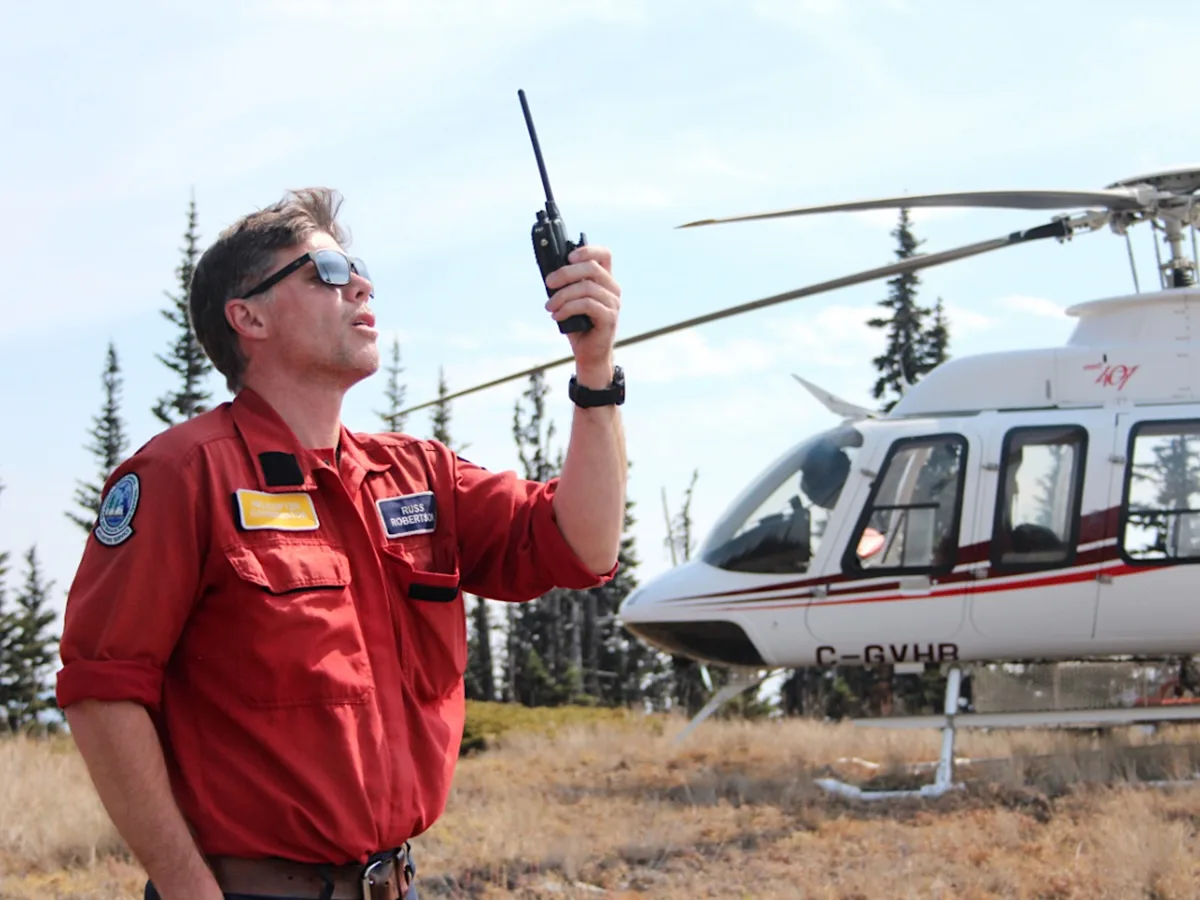
In the passenger seat next to Akeroyd, Russ Robertson, a veteran firefighter turned helicopter co-ordinator, surveys the smoke. It’s too thick for a helicopter to help, he tells those on the ground. They’ll have to do their best to quell the flames.
“It went from going great to going to shit, eh?” someone says into the radio.
Large, devastating fires like those B.C. has witnessed this year frequently spark complaints and questions from the public: Why are there helicopters sitting at the local airport while smoke billows from a nearby mountain? Why are no squadrons of water bombers coming to the rescue?
While officials might compare fighting a firestorm to spitting into a campfire, it does little to dispel the complaints that more could and should be done — in particular as anxious residents are evacuated and wait to hear if their homes, farm animals and pets have survived.
To better understand how aircraft are used as a tool in wildfire fighting, The Tyee climbed aboard a Bell 407 deployed to one of the province’s largest wildfires.
Flying above the Ainslie Creek wildfire , the massive 667-square-kilometre blaze south of Merritt, The Tyee witnessed the co-ordinated battle to keep the flames away from rural communities, First Nations and one of B.C.’s busiest transportation corridors.
The aerial observations, radio conversations between ground and air crews and candid interviews with Ainslie Creek’s air command shed new light on how B.C.’s wildfire officials use aerial resources at their disposal.
We observed wildfire fighters’ optimism about new technology and increased resources, but also the steep logistical, regulatory, physical and environmental challenges that come along with aerial firefighting.
If you think you hate smoke, you should be thankful you aren’t a pilot.
It’s a little after 11 a.m. and Akeroyd, a pilot with two decades and 9,900 hours of experience in the cockpit, is flying above a densely forested valley southwest of Merritt.
Robertson, sitting left-seat shotgun, is happy, for now. As a helicopter co-ordinator and veteran firefighting tactician, Robertson’s job is to supervise the pilots in the area and make sure the crews on the ground get the aerial support they need.
5News aggregated this summary from the outlet’s public feed. The full article, with all the context, is on thetyee.ca — the content belongs to The Tyee.