Japan risks repeating history by downplaying wartime aggression
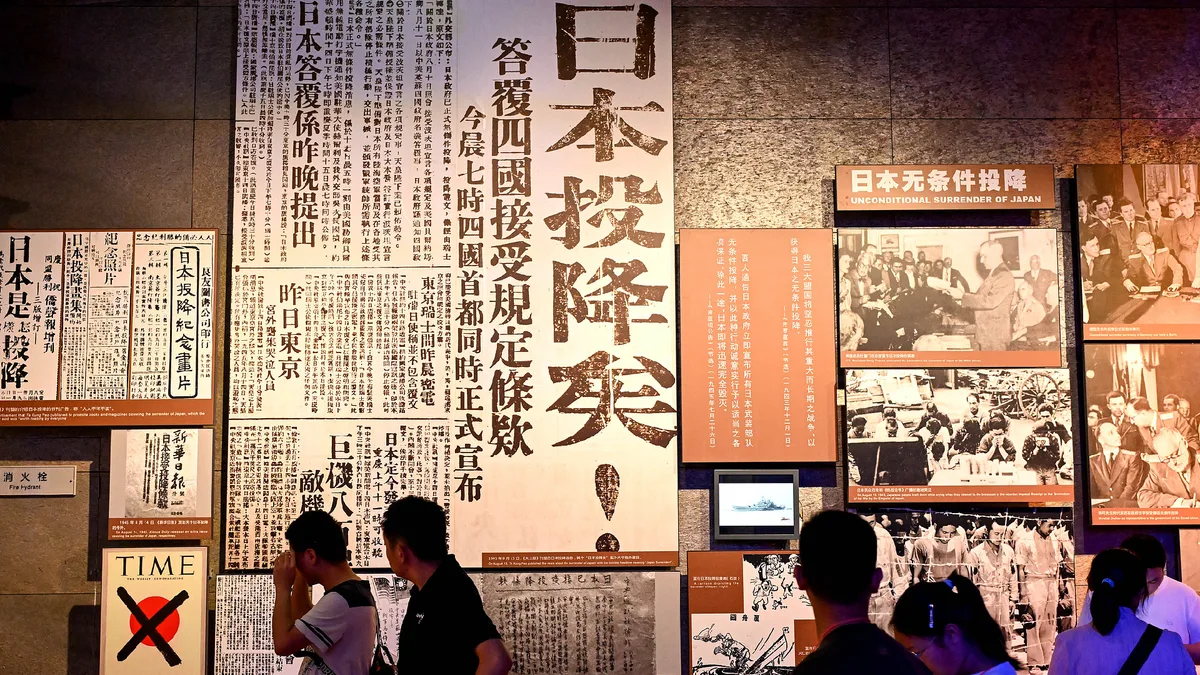
August 15 marked the anniversary of Japan's unconditional surrender in World War II.
Yet on the same day, Japanese politicians' moves involving the notorious Yasukuni Shrine drew strong opposition from Asian neighbors and scholars in Japan.
China's Foreign Ministry said the Yasukuni Shrine is a spiritual tool and symbol of Japanese militarism, and in fact, a shrine for war criminals, as it honors 14 convicted Class-A war criminals responsible for Japan's war of aggression.
China firmly opposes Japan's actions involving the shrine, it said.
South Korea's government also lodged a strong protest, criticizing the moves as "acts of forgetting history and going against the tide of history." Japanese scholars criticized Japan's downplaying of its wartime aggression and the country's growing push for remilitarization.
Japan risks 'repeating the mistakes of history' Atsushi Koketsu, professor emeritus at Yamaguchi University, said Japan should not make any move to visit Yasukuni Shrine, whether directly or indirectly, including making ritual offerings.
Many Japanese groups and politicians still refuse to acknowledge historical facts of aggression, including the Nanjing Massacre, a 1937 atrocity in which more than 300,000 Chinese civilians and disarmed soldiers were killed by Japanese troops, Koketsu said, adding that it is regrettable that even 80 years after the Tokyo Trials, many Japanese people have still not learned the lessons of history.
Aisa Kiyosue, a constitutional scholar and professor at Japan's Muroran Institute of Technology, said Japan should face up to the suffering its wars of aggression caused to the peoples in Asia, particularly the Chinese people, and warned that Japanese society faces the risk of a new form of militarism taking root.
"If Japan avoids its wartime crimes, or even glorifies or downplays its history of aggression through related actions, it will not only fail to win the trust of the international community, but could also risk repeating the mistakes of history," Kiyosue said. 'A new wartime system is gradually being built' Experts condemned Japanese politicians' growing trend toward remilitarization, warning that moves to expand Japan's military capabilities could undermine postwar peace and raise concerns about a return to militarism.
Kiyosue warned that Japan's easing of restrictions on arms exports, together with the establishment of a national intelligence agency, had increased the risk of the country repeating the path to militarism.
此摘要由5News从媒体的公开信息源汇聚而成。 包含完整背景的全文在www.cgtn.com — 内容归CGTN China (oficial)所有。