Gaza: A ceasefire without peace
Editor's Note: Wang Jin is a special commentator for CGTN and a Middle East expert at China's Northwest University.
The article reflects the author's opinions and not necessarily the views of CGTN.
Three years after October 7, 2023, Gaza has yet to achieve a lasting and just peace, and continues to face major security challenges.
Israel, Hamas, the Palestinian Authority, and the international community remain deeply divided over how to secure a lasting political settlement.
The road to peace remains long and difficult.
The conflict that erupted on October 7, 2023 is, in large part, a tragic consequence of the long-standing failure to resolve the Israeli-Palestinian issue.
Insufficient international attention to the Palestinian question, combined with the prolonged deadlock in peace negotiations, left the blockade of Gaza unresolved for years.
Hamas launched violent attacks against southern Israel in this conext, causing large-scale casualties and inflicting significant human and economic losses on Israel in the early stage of the conflict.
The Israeli-Palestinian peace process has long relied on dialogue mediated by the United States, while effective mechanisms for peace monitoring and conflict management have remained limited.
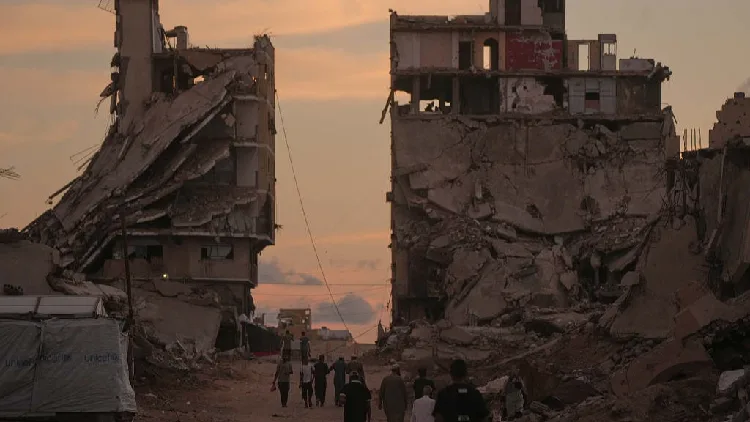
Over the past three years, Israel has conducted large-scale military operations in Gaza, resulting in a severe humanitarian crisis.
Limited international oversight and constraints have also exposed major gaps in the international community's capacity to manage and contain the conflict.
In October 2025, Israel and Hamas reached a ceasefire agreement under mediation, with arrangements on issues including the exchange of personnel.
The Gaza conflict has since entered a new phase.
While large-scale and high-intensity fighting has largely subsided, the two sides remain far from achieving genuine and lasting peace.
此摘要由5News从媒体的公开信息源汇聚而成。 包含完整背景的全文在www.cgtn.com — 内容归CGTN World (oficial)所有。