Climate forecasts alone won't protect Africa's poorest farmers
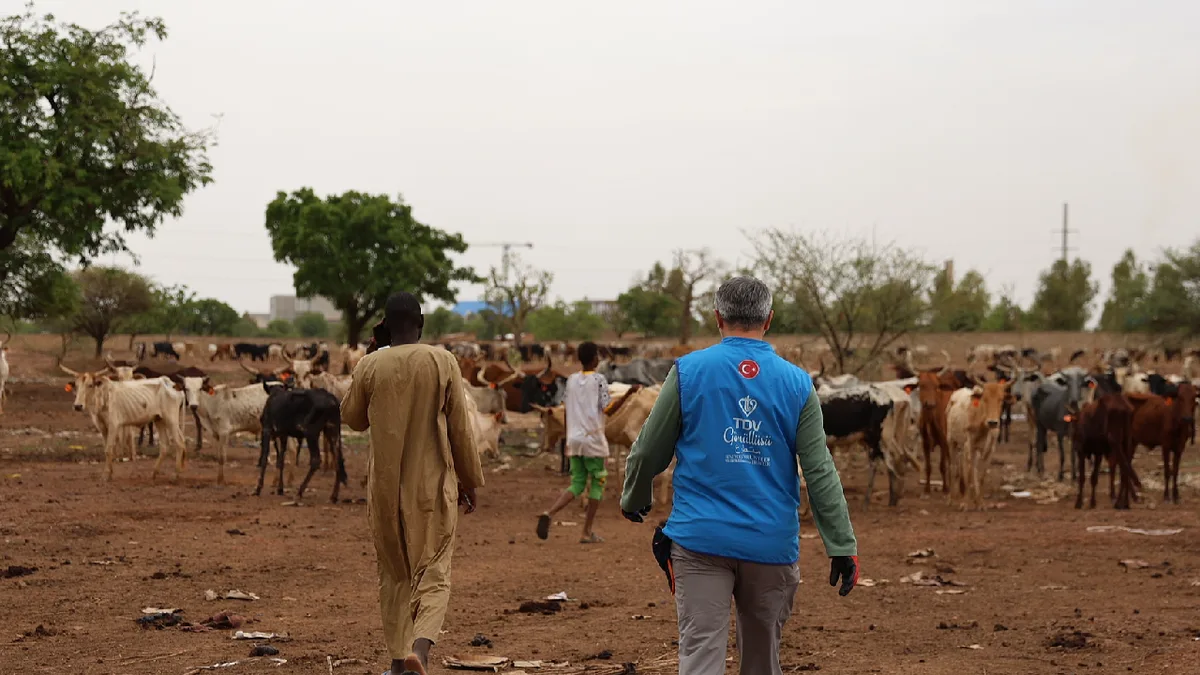
Improved weather forecasts could help livestock farmers prepare for increasingly severe droughts, but new research suggests they will have limited impact unless vulnerable households also have the means to act on the warnings.
An international team led by the University of Sydney and Imperial College London says combining climate information with measures such as livestock feed, drought insurance, targeted financial assistance and better market access could help protect some of southern Africa's poorest pastoral communities from climate shocks.
The study, published in Nature Sustainability , comes as the region prepares for the potential impacts of a powerful El Nino weather event.
Researchers warn that increasing climate variability could deepen existing inequalities across southern Africa's rangelands, where millions of people depend on cattle, sheep and goats for income, food and household savings.
Forecasts are not enough Lead researcher Dr.
Matt Clark said the challenge was not simply a lack of access to climate information, but the limited ability of poorer farmers to respond to it.
"If the forecasts prove correct and we see a near-record El Nino develop, we expect this will amplify inequalities across southern African rangelands," Clark said.
While wealthier livestock owners can sell animals before drought conditions worsen and later rebuild their herds, poorer pastoralists often lack the financial resources to reduce their herds or purchase supplementary feed.
This can leave them with little choice but to keep livestock on increasingly degraded grazing land, increasing the risk of livestock deaths and further loss of household wealth.
The consequences can extend beyond individual families, affecting food security, livelihoods and the health of fragile rangelands.
The researchers say practical support can enable farmers to act on forecasts before drought takes hold, potentially reducing both economic losses and environmental damage.
Combining adaptation measures The team used detailed modeling to examine how pastoral households across Botswana, Eswatini, Lesotho, Mozambique, Namibia, South Africa and Zimbabwe might respond to increasing rainfall variability.
The researchers combined projected rainfall data from European climate models with information on livestock, vegetation and household wealth.
Their first simulation examined a business-as-usual scenario and found that greater rainfall variability could reduce household wealth, increase livestock losses, degrade grasslands and widen inequality.
此摘要由5News从媒体的公开信息源汇聚而成。 包含完整背景的全文在www.cgtn.com — 内容归CGTN World (oficial)所有。