Chinese team fixes panda's crooked jaw in first-of-its-kind procedure
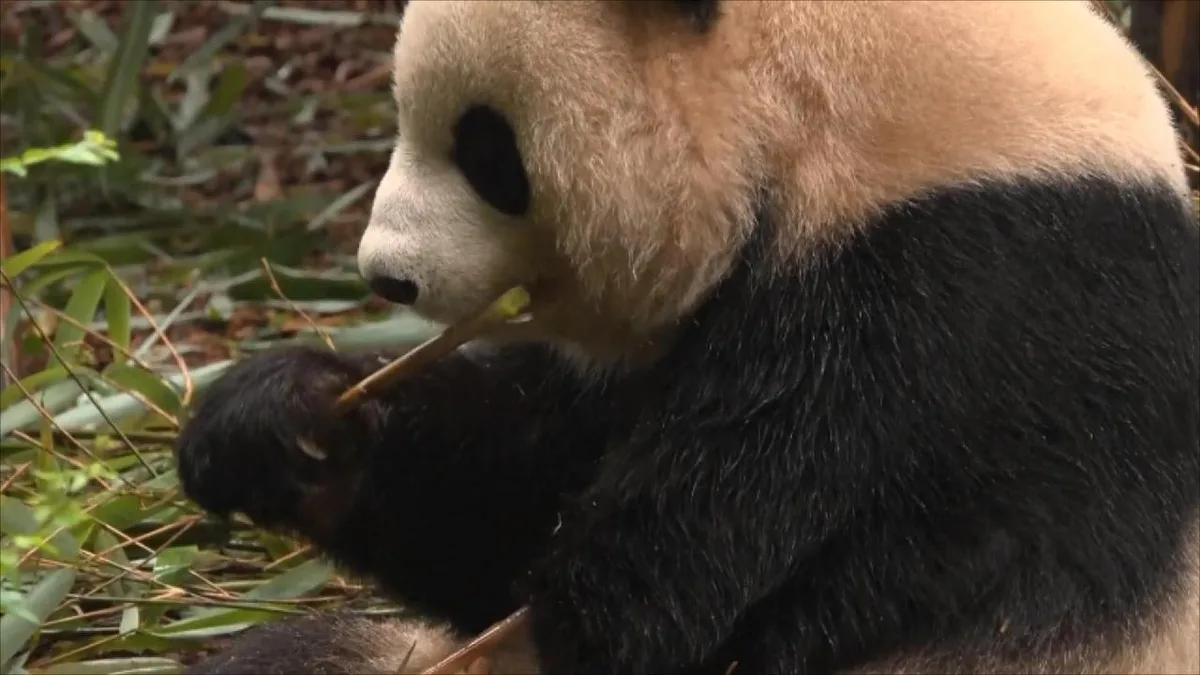
Chinese specialists have successfully corrected a giant panda's crooked jaw using an orthodontic technique adapted from human treatment, marking the first such procedure performed on a giant panda.
The treatment, jointly carried out by the Chengdu Research Base of Giant Panda Breeding and West China Hospital of Stomatology, restored the panda's ability to bite and chew normally.
Related research was published in July in The Angle Orthodontist, a leading international orthodontic journal.
Beixia, a male giant panda born in 2022, suffered a jaw injury shortly after birth, and his left forelimb also had to be amputated following irreversible damage.
By around three months of age, his lower jaw had begun to deviate to the left, causing milk to leak from his mouth and raising concerns that he could eventually struggle to chew bamboo, posing a serious threat to his survival.
With Beixia's jaw still developing, veterinarians and orthodontists decided to use the panda's natural growth potential to correct the asymmetry.
They digitally scanned his mouth and designed a customized fixed appliance using three orthodontic elastic bands to apply gentle traction and guide the jaw toward more symmetrical growth.
Long Hu, an orthodontist at West China Hospital of Stomatology, said it was the first time a growth-modification technique used in human orthodontics had been applied to a giant panda.
"At the time, we deliberated over whether to proceed with the treatment while the panda was still young or wait until it reached adulthood.
Ultimately, following a multidisciplinary consultation, we decided that the procedure needed to be performed without delay during its youth.
We performed an intraoral scan of Beixia and then used 3D digital design to create an orthodontic appliance intended to shift the mandible back into alignment and correct the deviation," Long said.
The treatment lasted about six months.
The bands were removed before each feeding and put back afterward.
At first, Beixia would push at them with his tongue or paw at his mouth, requiring caregivers to watch closely to prevent the bands from coming loose or being swallowed.
此摘要由5News从媒体的公开信息源汇聚而成。 包含完整背景的全文在www.cgtn.com — 内容归CGTN China (oficial)所有。