Five years on Beijing Stock Exchange fuels China's hard tech push
Editor's note: Aaron Liu is a business reporter from CGTN.
The article reflects the author's opinions and not necessarily the views of CGTN.
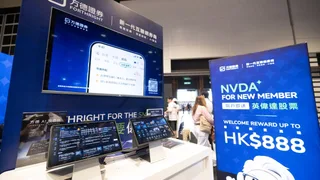
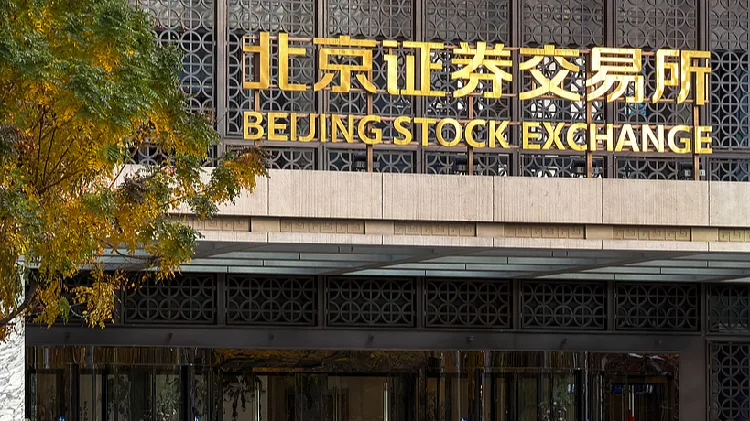
Five years after its launch, the Beijing Stock Exchange (BSE) has moved beyond the question of whether it can establish a distinct role in China's capital market.
The more important question now is how effectively it can support the country's specialized technology-driven SMEs.
The answer is increasingly visible in both the numbers and the companies behind them.
The BSE now has 339 listed companies with a combined market capitalization of around 840 billion yuan ($123.84 billion).
Fifty-three companies have gone public in the first eight months of this year, accounting for more than half of all new A-share listings nationwide.
More than 60% of BSE-listed companies are national-level "little giant" enterprises, with R&D intensity and independent invention patent holdings more than twice the average of China's large industrial enterprises.
Having followed the BSE since its launch, I have seen this transformation firsthand.
In 2021, I visited two "little giant" companies facing financing challenges as they sought to turn technological breakthroughs into commercial products.
Revisiting them ahead of the BSE's fifth anniversary showed how access to long-term capital can change their trajectory.
Beijing-based Tri-Prime Gene, for example, was then working to move laboratory research into production while facing the demands of lengthy R&D cycles.
Since listing on the BSE and securing follow-on financing, it has accelerated clinical trials and industrialization, moving closer to large-scale manufacturing.
AVIC Forstar S&T, a leading domestic producer of high-end radio frequency interconnection products, faced a similar challenge.
此摘要由5News从媒体的公开信息源汇聚而成。 包含完整背景的全文在www.cgtn.com — 内容归CGTN Business (oficial)所有。