Sci-tech cooperation helps the Global South build its own capacity
Science, technology and innovation drive development, yet the gap between those with the knowledge and those who merely consume it remains wide.
In January 2024, the United Nations General Assembly designated September 16 as the International Day of Science, Technology and Innovation for the South, underscoring a shift in how developing countries approach this divide.
The emphasis is not simply on technology transfer, but on building the capacity of Global South nations to generate, adapt and sustain their own scientific solutions.
China's engagement in South-South sci-tech cooperation reflects this evolving approach.
Two agricultural technologies illustrate how cooperation can move from providing ready-made solutions to cultivating local expertise: Juncao, a grass-based mushroom cultivation technology, and hybrid rice.
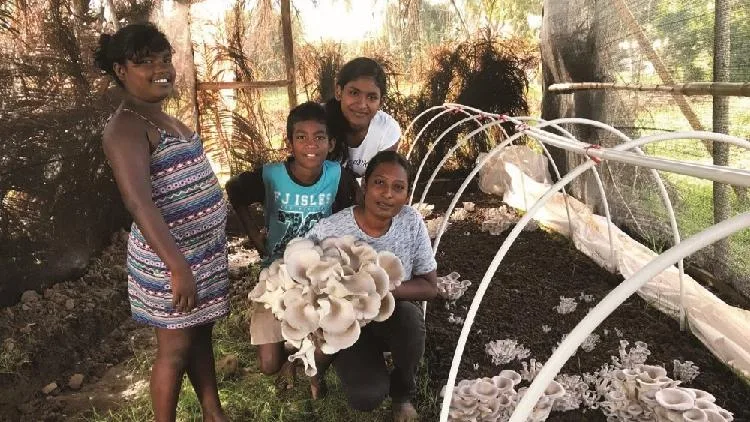
Juncao in Fiji: From saline soil to household income In Fiji, the China-Fiji Juncao Technology Demonstration Center, established in 2014, has trained more than 2,900 local technicians, promoted Juncao cultivation on over 2,500 hectares and helped more than 3,500 households achieve sustained income growth.
The technology originated in China as a substrate for cultivating edible mushrooms, using wild grasses instead of timber.
In Fiji, its use has expanded beyond mushroom production.
On severely saline coastal land, planting Juncao for four months reduced soil salt content from 1.67% to 0.4%, restoring degraded agricultural land.
For individual farmers, the economics are straightforward.
Beyond food production, Juncao has addressed a persistent food constraint on Fiji's livestock sector.
Hybrid rice in Madagascar: Building a research system In Madagascar, hybrid rice cooperation has likewise moved beyond the distribution of seeds.
Since 2007, Chinese institutions have worked with Malagasy partners to establish demonstration bases and adapt hybrid rice varieties to local conditions.
Annual hybrid rice cultivation in Madagascar has reached nearly 90,000 hectares, with yields exceeding conventional varieties by more than 20%.
此摘要由5News从媒体的公开信息源汇聚而成。 包含完整背景的全文在www.cgtn.com — 内容归CGTN China (oficial)所有。