Trump's 'economic war' on Iran faces question marks over impact
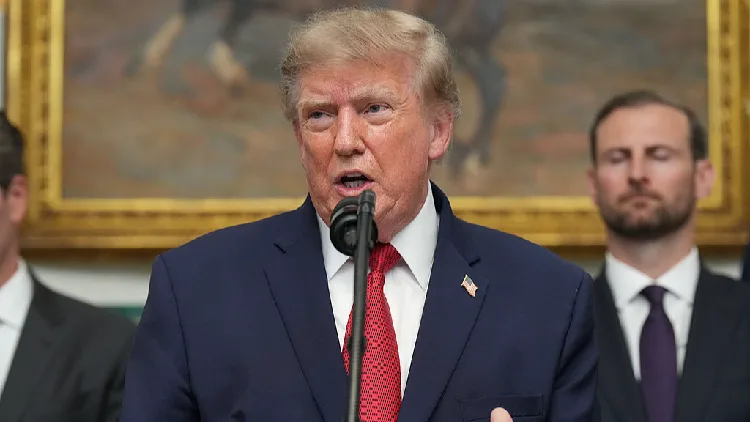
US President Donald Trump on Wednesday announced what he called the "most crushing economic operation ever" against Iran, one he said would amount to "economic warfare." Experts said the move reflects Washington's attempt to shift from military pressure to economic coercion amid a deadlock in US-Iran tensions, while its actual impact remains uncertain.
They questioned whether the sanctions can be effectively implemented and achieve their intended goals, noting that decades of US sanctions against Iran have failed to force Tehran's hand.
Trump said in a social media post that any country allowing its financial institutions, businesses, airports or government structures to support Tehran will face massive economic consequences.
He called for an immediate halt to activities including "oil smuggling," currency exchanges, cash transfers, vessel registrations and the use of shell companies while urging US allies to join Washington in isolating Tehran.
US Treasury Secretary Scott Bessent last week warned that Washington would soon unveil "unprecedented" measures to economically isolate Iran alongside efforts to block the Strait of Hormuz and prevent goods from entering or leaving Iranian ports.
From military pressure to economic coercion Li Zixin, an assistant research fellow at the China Institute of International Studies, said Washington's turn toward economic warfare stems largely from the limited effectiveness of military action and the difficulty of achieving further breakthroughs in the short term.
Since the conflict began in late February, the US military has rapidly consumed various types of missiles, with defensive ammunition stockpiles under particular pressure, Li said.
At the same time, US assets in the Middle East and the security of American allies have faced mounting challenges.
Domestic political pressure has also pushed the Trump administration to adjust its approach, Li said.
Since the conflict began, at least 18 US service members have been killed, nearly $40 billion has been spent, and US gasoline prices have risen by nearly 40% from pre-conflict levels.
With the midterm elections approaching, the growing costs of the conflict have become a political burden for the White House.
"This is a strategic shift after military measures failed to achieve political objectives, rather than the administration's preferred option from the outset," Li said.
He also cast doubt on the potential impact of the sanctions, saying higher oil prices could create new pressure on global markets and American consumers.
Meanwhile, Iran's decades of experience dealing with sanctions has enabled it to develop resilient mechanisms to circumvent restrictions, further limiting the effectiveness of economic pressure, he said.
此摘要由5News从媒体的公开信息源汇聚而成。 包含完整背景的全文在www.cgtn.com — 内容归CGTN Politics (oficial)所有。