A feast of calligraphy and painting masterpieces at the Palace Museum
An exhibition highlighting Chinese calligraphy and painting treasures from the Tang (618-907) and Song (960-1279) dynasties at the Palace Museum in Beijing has become highly sought after in recent days.
A view of a facsimile of Wang Xizhi's "Preface to the Poems Composed at the Orchid Pavilion," attributed to Tang Dynasty calligrapher Chu Suiliang, on display at the Palace Museum in Beijing. /CGTN A view of a facsimile of Wang Xizhi's "Preface to the Poems Composed at the Orchid Pavilion," attributed to Tang Dynasty calligrapher Chu Suiliang, on display at the Palace Museum in Beijing. /CGTN The Defining the Classics: A Journey to Tang and Song Calligraphy and Paintings exhibition features 107 artworks from a golden age of Chinese calligraphy and painting.
These masterpieces embodied the highest artistic achievements of their times and have continued to inspire imitation and innovation by later generations.
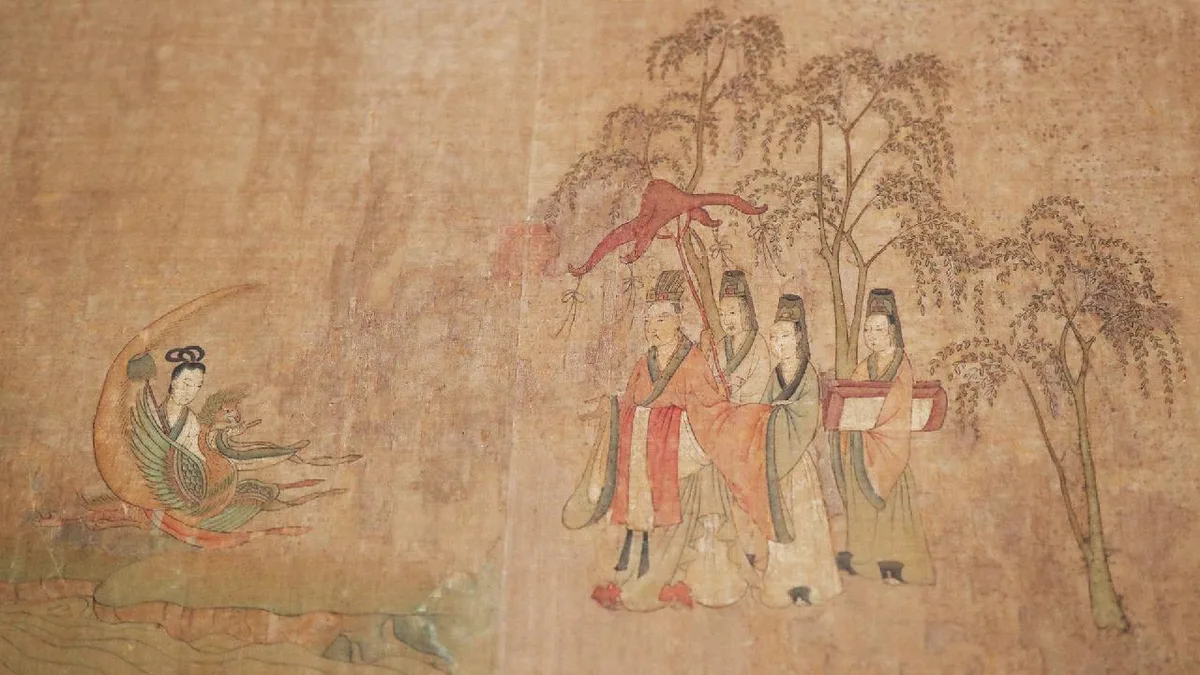
A view of a Song Dynasty facsimile of "Ode to the Goddess of the Luo River," a celebrated scroll painting by Eastern Jin Dynasty master painter Gu Kaizhi, on display at the Palace Museum in Beijing. /CGTN A view of a Song Dynasty facsimile of "Ode to the Goddess of the Luo River," a celebrated scroll painting by Eastern Jin Dynasty master painter Gu Kaizhi, on display at the Palace Museum in Beijing. /CGTN A view of a Song Dynasty facsimile of "Ode to the Goddess of the Luo River," a celebrated scroll painting by Eastern Jin Dynasty master painter Gu Kaizhi, on display at the Palace Museum in Beijing. /CGTN A view of a Song Dynasty facsimile of "Ode to the Goddess of the Luo River," a celebrated scroll painting by Eastern Jin Dynasty master painter Gu Kaizhi, on display at the Palace Museum in Beijing. /CGTN Highlights of the first phase, which runs through September 27, include Tang Dynasty calligrapher Chu Suiliang's facsimile of Lanting Xu ( Preface to the Poems Composed at the Orchid Pavilion ) by renowned Eastern Jin Dynasty (317-420) calligrapher Wang Xizhi; a Song Dynasty facsimile of Luoshen Fu ( Ode to the Goddess of the Luo River ), a celebrated scroll painting by Eastern Jin Dynasty master painter Gu Kaizhi; and Bunian Tu ( Emperor Taizong Receiving the Tibetan Envoy ), a landmark painting by Tang Dynasty artist Yan Liben.
A lacquer screen with painted figures from the tomb of Sima Jinlong, dating back to the Northern Wei Dynasty (386-534), is on display at the Palace Museum in Beijing. /CGTN A lacquer screen with painted figures from the tomb of Sima Jinlong, dating back to the Northern Wei Dynasty (386-534), is on display at the Palace Museum in Beijing. /CGTN The second phase of the exhibition will run from September 30 to November 1, featuring precious artworks from the Song Dynasty.
此摘要由5News从媒体的公开信息源汇聚而成。 包含完整背景的全文在www.cgtn.com — 内容归CGTN Culture (oficial)所有。