Beyond defense: Economic implications of the US-Greenland deal
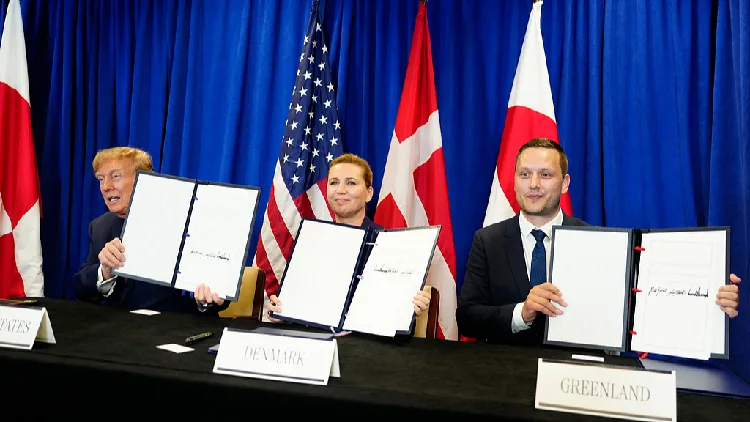
The United States, Denmark and its autonomous territory of Greenland on Tuesday signed an agreement in New York to expand the US military presence on the strategically located Arctic Island, easing months of tensions within the NATO alliance over US President Donald Trump's push to acquire Greenland.
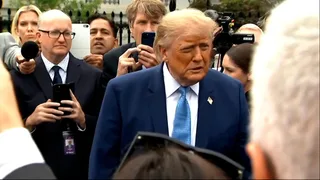
Trump, Danish Prime Minister Mette Frederiksen and Greenland's Prime Minister Jens-Frederik Nielsen signed the agreement on the sidelines of the UN General Assembly.
Nielsen told Greenlandic broadcaster KNR that it would take time to rebuild trust between Greenland and the United States after months of tensions.
Besides allowing the US to modernize and expand activities at Pituffik Space Base and establish additional defense areas at Narsarsuaq and Mestersvig, the agreement also contains provisions that extend beyond military affairs, including restrictions on certain foreign economic activities in Greenland's sensitive sectors.
Beyond military affairs The agreement's emphasis on the US defense presence in Greenland is accompanied by provisions that can also affect the island's economic choices, particularly in the juncture of economic affairs and military concern.
The rationale for these economic provisions is not explicitly attributed to the United States in the text.
But Trump has repeatedly framed Greenland's security in broader terms.
In a Truth Social post announcing the agreement, Trump said it gives the United States "permanent control" over Greenland's security and addresses "ALL of our many US concerns." He also described it as an "Infinite Life" agreement.
Article X is particularly notable.
It says the parties recognize a threat to national security and public order from efforts by "adversaries" to "expand influence and control" in Greenland.
It then establishes restrictions on investment and access in sensitive sectors involving states or investors outside NATO, NATO partners and the EU.
The agreement says Greenland will apply its current or future investment-screening laws "in close cooperation" with Danish authorities, while relevant Danish authorities will engage in "close consultation" with US authorities and other partners.
It also defines "particularly sensitive sectors or activities" to include critical infrastructure and "the extraction of resources." This gives the provisions a direct potential impact on Greenland's mining sector, including its rare-earth resources.
Critical minerals come into focus Greenland has attracted international attention for its deposits of rare earth elements and other critical minerals.
此摘要由5News从媒体的公开信息源汇聚而成。 包含完整背景的全文在www.cgtn.com — 内容归CGTN World (oficial)所有。