China's 'super buyer' power fuels new engine for global trade
From Spanish ham and Malaysian durians to Nepalese wool felt and African handicrafts, a growing range of overseas products is finding its way into the hands of Chinese consumers.
At the imported commodities market of Yiwu International Trade City in east China's Zhejiang Province, some 150,000 products from more than 100 countries and regions are on display, offering a glimpse into China's steadily expanding import landscape.
As China is opening its market and tapping the potential of domestic demand, the world's "super buyer" is bringing fresh momentum to global trade and economic growth.
From selling to the world to buying from the world Known as the world's largest wholesale market for small commodities, Yiwu has long been selling Chinese-made products around the globe.
Increasingly, however, the city is also becoming a gateway for goods from around the world entering the Chinese market.
As imports into Yiwu have maintained strong growth, the customer base has expanded to major Chinese markets such as Beijing, Shanghai and Hangzhou.
And now it takes only three days for products, such as bird's nest from Malaysia, to pass through customs in Yiwu, enter bonded warehouses and reach Chinese consumers.
In the first half of 2026, Yiwu's total foreign trade value reached 486.42 billion yuan ($72.5 billion) up 19.9% year on year, with imports rising 39.1% to 65.7 billion yuan ($9.8 billion).
Hainan's policy opening boosts imports Further south, China's island province of Hainan is also seeing imports gain momentum as new policies and improved logistics facilities take effect.
Following the launch of island-wide independent customs operations in December 2025, the share of goods covered by the province's "zero-tariff" policy was raised to 74%, while the number of duty-free product categories expanded to more than 6,600.
The policy benefits have boosted both consumer spending and imports.
In the first seven months of 2026, offshore duty-free sales in Hainan reached 21.6 billion yuan ($3.2 billion), up 17.9% year on year, driving growth in bonded warehousing and the circulation of imported goods.
Meanwhile, the value of zero-tariff imports reached 3.624 billion yuan ($540.4 million) by the end of July, up 40.14% year on year, with 598 million yuan ($89.2 million) in taxes exempted.
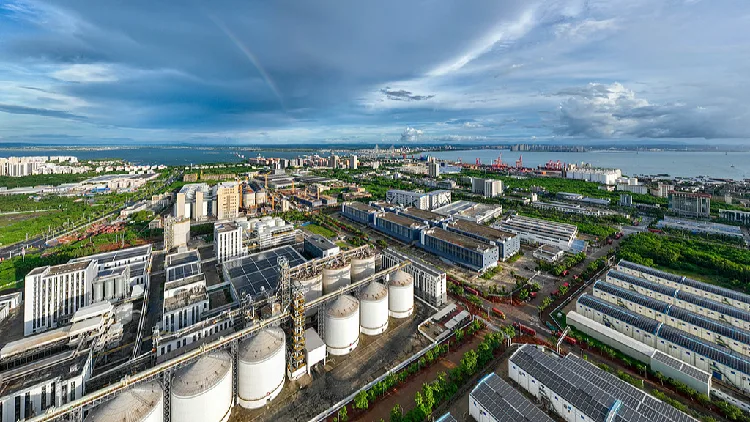
With three new international trade routes added, the province's Yangpu Port now has 38 in total to handle growing volumes of fresh produce from Southeast Asia, strengthening its role as a key distribution hub for imported goods.
此摘要由5News从媒体的公开信息源汇聚而成。 包含完整背景的全文在www.cgtn.com — 内容归CGTN Business (oficial)所有。