China's export controls on PV: Precision, balance, and rules-based
Editor's note: Xu Xiaohua is chairman of Anhui Huasun Energy Co., Ltd., vice chairman of the Finance Committee, co-chair of the Perovskite Committee of the China Photovoltaic Industry Association, and chairman of the Supervisory Board of the Anhui New Energy Chamber of Commerce.
The article reflects the author's opinions and not necessarily the views of CGTN.
Recently, relevant Chinese authorities have introduced specific measures governing export controls on photovoltaic (PV) cell manufacturing equipment and technology.
In light of industry practice, several observations are worth sharing.
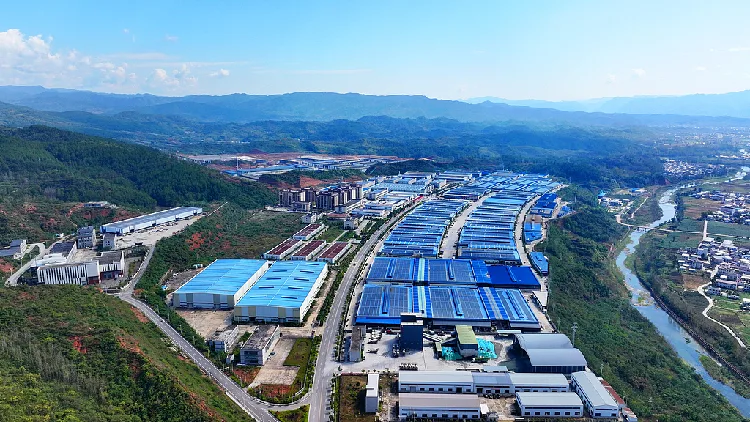
Controls aim to safeguard China's competitive advantage in the global PV industry Over more than two decades, China's PV sector has built a fully integrated industrial chain spanning polysilicon, wafers, cells, modules, and core manufacturing equipment, securing a pivotal position in global markets.
This hard-won advantage is the fruit of relentless effort, sustained investment, and continuous innovation by generations of PV pioneers.
It also serves as a critical pillar for maintaining China's manufacturing competitiveness in the global energy transition.
The global PV industry is at a critical juncture, defined by accelerating technology iteration and intensifying market competition.
As the key vehicle for core process technology, PV manufacturing equipment embodies China's accumulated mass-production experience and industrial scale-up expertise.
Imposing necessary controls on cutting-edge core equipment that represents next-generation PV technology can help prevent the unwarranted transfer of critical technology and process know-how, safeguarding China's global competitive edge and long-term development potential in the PV industry.
This policy arrangement enables China to retain strategic initiative in global PV technology competition.
In essence, it is a legitimate measure to safeguard national strategic interests and preserve the industry's long-term competitiveness.
Controls demonstrate a measured and rational governance philosophy The policy follows a category-based, targeted management philosophy.
Instead of resorting to simple, blanket restrictions across the board, it applies targeted regulatory controls to relevant equipment based on differences across technology generations.
此摘要由5News从媒体的公开信息源汇聚而成。 包含完整背景的全文在www.cgtn.com — 内容归CGTN Business (oficial)所有。