2026年10月9日星期五 媒体关于🌓
🇨🇳 CN ▾
快讯
› Hong Kong rejects US downgrade to lowest tier in human trafficking report› Pentagon unveils US$350 million quantum computing push as China rivalry grows› After failed US execution, Christa Pike is walking but mentally ‘foggy’, lawyer says› Venezuela’s Maduro and wife Flores tortured US citizens to stay in power: US prosecutors› The long-deployed USS Abraham Lincoln returns home to San Diego from Middle East› US probes Harvard, Yale, MIT, other universities over alleged visa fraud, with China focus› German official killed, another injured during firearms inspection› UK navy sailor appears in London court on charges of spying for Russia› China’s BYD considering lithium battery plant in Argentina, foreign minister says› Trump says US will not attack Iran before November’s midterm elections› Hong Kong rejects US downgrade to lowest tier in human trafficking report› Pentagon unveils US$350 million quantum computing push as China rivalry grows› After failed US execution, Christa Pike is walking but mentally ‘foggy’, lawyer says› Venezuela’s Maduro and wife Flores tortured US citizens to stay in power: US prosecutors› The long-deployed USS Abraham Lincoln returns home to San Diego from Middle East› US probes Harvard, Yale, MIT, other universities over alleged visa fraud, with China focus› German official killed, another injured during firearms inspection› UK navy sailor appears in London court on charges of spying for Russia› China’s BYD considering lithium battery plant in Argentina, foreign minister says› Trump says US will not attack Iran before November’s midterm elections
科技

China makes progress in 3-nm chips without advanced lithography tools
South China Morning Post - Tech ·
China makes progress in 3-nm chips without advanced lithography tools

The breakthrough by the Chinese Academy of Sciences is far from mass production but shows China is tracking the road map of global leaders

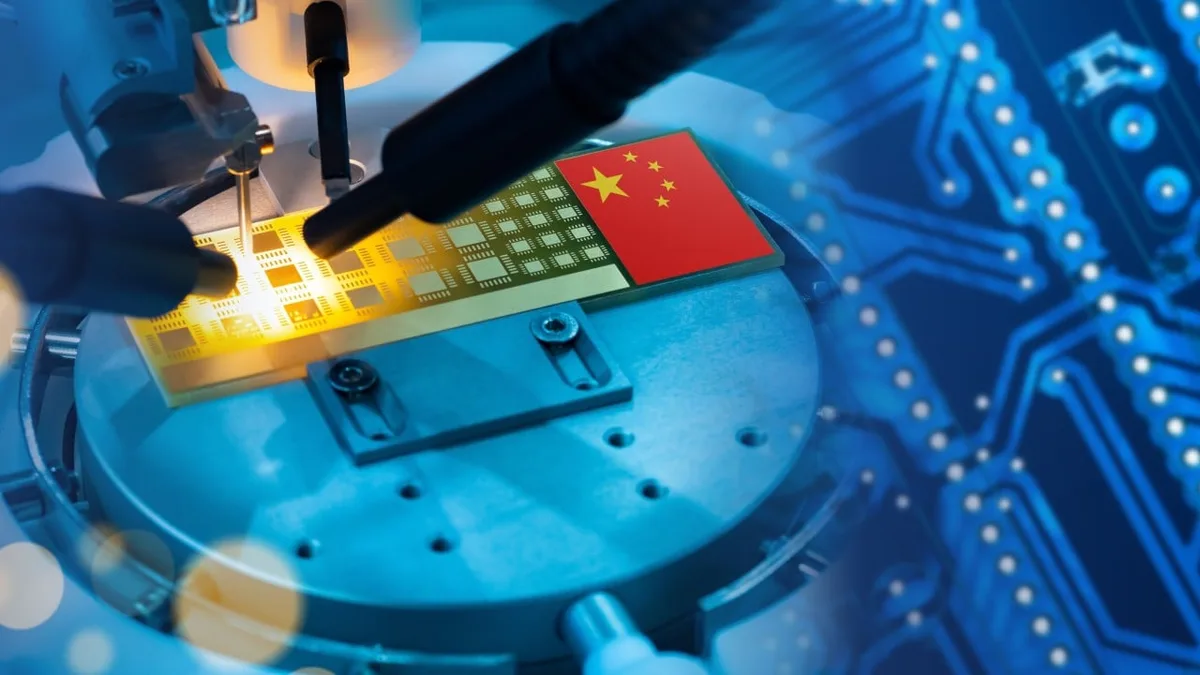
Chinese researchers have made early strides in pushing semiconductor processing nodes below 3-nm using older lithography technology, as more advanced extreme ultraviolet lithography (EUV) tools from ASML remain blocked under US sanctions.

The breakthrough marks the latest progress in China’s drive to chart an alternative path to advanced chipmaking amid US export restrictions. Under current export control rules, Dutch equipment giant ASML is barred from selling its state-of-the-art EUV machines – essential for producing chips below the 7-nm node – to Chinese clients.

In the latest development, state-backed Chinese Academy of Sciences (CAS) has established a preliminary gate-all-around (GAA) device development path using the less advanced deep ultraviolet (DUV) lithography, Taiwanese media Digitimes reported on Thursday, citing a speech by Ye Tianchun, a veteran from the academy’s Institute of Microelectronics (IMECAS).

Ye said the institute had finished early integration for stacked nanosheet-channel GAA CMOS transistors using DUV tools. He described the result as a “new early-stage MOS transistor process path for China’s sub-3-nm advanced manufacturing”, according to the Digitimes article.

在South China Morning Post - Tech阅读完整文章 ›

此摘要由5News从媒体的公开信息源汇聚而成。 包含完整背景的全文在www.scmp.com — 内容归South China Morning Post - Tech所有。

更多来自South China Morning Post - Tech的报道

查看全部 ›

更多科技新闻

查看全部 ›