China steps up to help Mongolia fight desertification
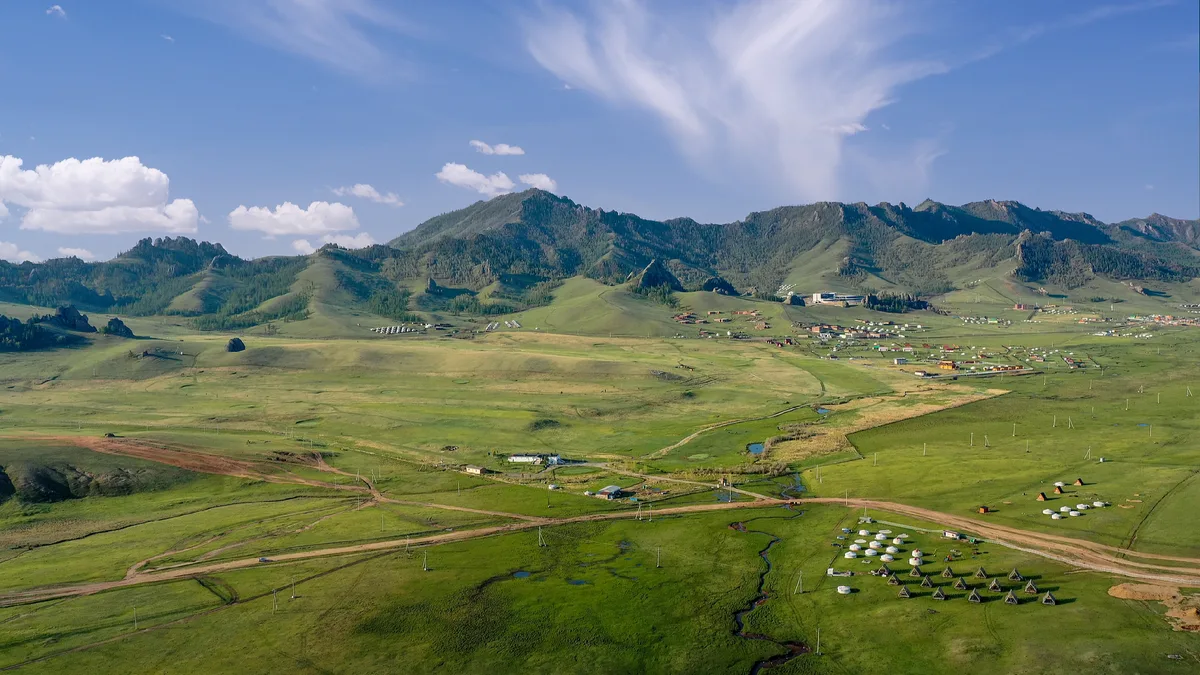
In Ulan Bator, capital of Mongolia, the 17th session of the Conference of the Parties (COP17) to the UN Convention to Combat Desertification (UNCCD) is underway, with China offering strong support for the summit.
Beyond the conference halls, China has long been helping its neighbor tackle a growing threat.
More than 70% of Mongolia's territory is affected by desertification, with the southern Gobi region hardest hit.
Spring dust storms regularly sweep across the border, making it a shared environmental challenge.
Since signing the UNCCD in 1994, China has evolved from a recipient of international green aid into a global provider of land restoration expertise, becoming the first country to reverse land degradation and shrink its desert footprint.
Mongolia is a key partner in this work.
Mongolia faces a critical shortage of sapling nurseries.
China has stepped in to fill the gap.
North China's Inner Mongolia Autonomous Region has become Mongolia's primary sapling supplier, shipping over 11.7 million saplings by early June.
Beyond saplings, Inner Mongolian specialists are helping build ecological restoration zones, roll out afforestation models, and launch joint sandstorm monitoring systems, says Hou Shuxia from Inner Mongolia University of Finance and Economics.
The renowned Kubuqi Model, a public-private-people partnership, sits at the heart of this shared toolkit.
Meteorological collaboration is also deepening.
In April, the two countries held their first joint video briefing to assess spring dust risks, vegetation growth, and seasonal climate trends.
At the 2025 World Artificial Intelligence Conference in Shanghai, China donated its AI-powered meteorological warning system MAZU to Mongolia.
此摘要由5News从媒体的公开信息源汇聚而成。 包含完整背景的全文在www.cgtn.com — 内容归CGTN Nature (oficial)所有。