China's Mid-Autumn Festival and the legends we put in the moon
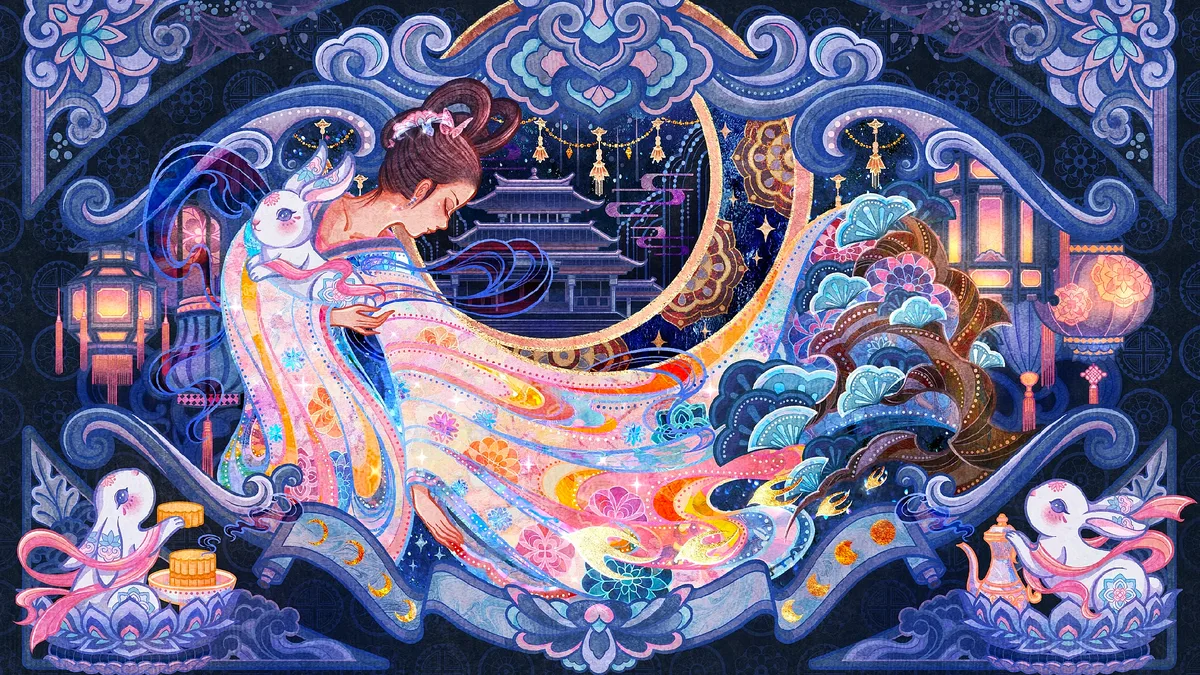
"The bright moon rises over the sea; at this moment, we share it though we are worlds apart," wrote the Tang poet Zhang Jiuling more than a thousand years ago, in his poem " Gazing at the moon, thinking of the faraway." Longing for someone far away and finding, in the moon overhead, a kind of shared solace is a sentiment that has outlived him by over a millennium, because once a year, entire cultures still turn to this idea.
The 15th day of the eighth lunar month, when the moon is at its fullest and closest to Earth, marks the Mid-Autumn Festival – one of the oldest and most widely celebrated holidays in Chinese culture, tracing back to the Shang Dynasty ( 1600 to 1046 BC) and taking its formal shape centuries later in the Tang (AD 618 to 907) , when emperors began holding court ceremonies beneath the full moon.
By the Northern Song (AD 960 to 1127) , the 15th day of the eighth lunar month had become established as the Mid-Autumn Festival.
In our own time, the festival has moved from the historical court into the family home: families gather, lanterns are lit, and mooncakes are cut into wedges and shared.
But what makes the Mid-Autumn Festival remarkable is not simply the ritual itself, but the mythology it has accumulated through centuries of legends and stories.
Let's look at a few of them.
The story of Chang'e The oldest and most central story begins not with the moon but the sun, or rather, with too many of them.
The story goes that in ancient times, ten suns, who were brothers, took turns crossing the sky.
One day, all ten decided to appear at the same time.
The intense heat dried up rivers, burned crops and made life on Earth almost impossible.
Armed with a mighty bow and arrows, a hero named Hou Yi climbed a high mountain and tried to warn the suns.
When they refused to listen, he drew his bow and shot down nine of them, leaving only one, so the world could survive.
The Queen Mother of the West, moved by his courage, gave him an elixir of immortality as a reward.
The elixir was meant for one person only, but Hou Yi could not bear the idea of becoming immortal without his wife, Chang'e.
此摘要由5News从媒体的公开信息源汇聚而成。 包含完整背景的全文在www.cgtn.com — 内容归CGTN China (oficial)所有。