How Israel's E1 plan in West Bank threatens a future Palestinian state
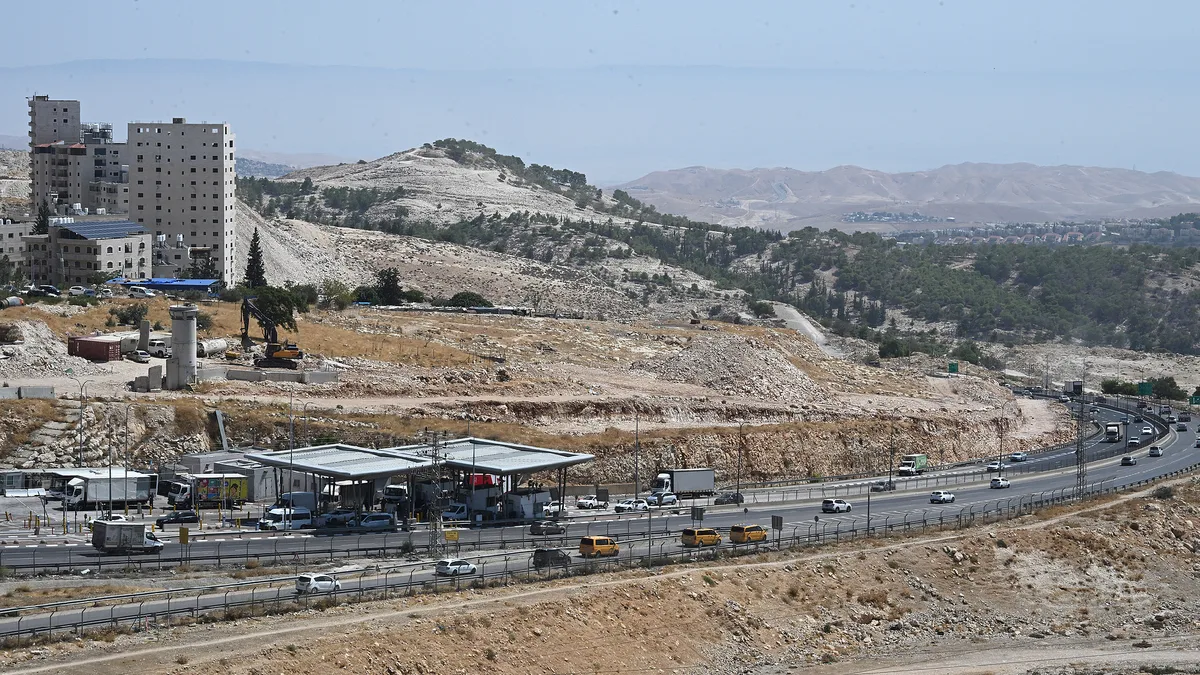
Israel's plan to build new settlements in the E1 area of the occupied West Bank has drawn widespread international condemnation, with the international community warning that the project could further undermine the territorial continuity needed for a future Palestinian state.
E1 covers about 12 square kilometers between East Jerusalem and the settlement of Maale Adumim, one of the largest Israeli settlements in the occupied West Bank.
Israel has planned to build settlements there since the 1990s, but the project has repeatedly been delayed amid international pressure.
On August 18, Israeli authorities opened a tender for 1,234 of the 3,401 housing units approved by the Israeli government last August.
The significance of E1 lies in its location.
The area connects East Jerusalem with Maale Adumim.
Building settlements there would link existing Israeli settlements, further fragmenting the West Bank and severing the territorial connection between East Jerusalem and other Palestinian areas.
This is why the project is widely seen as a threat to the two-state solution.
Palestinian President Mahmoud Abbas said it would undermine prospects for an independent Palestinian state based on the 1967 borders, with East Jerusalem as its capital.
Abbas said the E1 plan violates international law and UN Security Council Resolution 2334.
Adopted in 2016, the resolution calls on Israel to "immediately and completely cease all settlement activities" in the occupied Palestinian territory, including East Jerusalem.
East Jerusalem, the West Bank and Gaza Strip form a geographic and political entity and constitute the occupied Palestinian territory, Abbas said, adding that settlement expansion and annexation cannot create legal rights or change the territory's legal status.
Why has the plan triggered international condemnation? The plan has triggered strong international condemnation, particularly from Europe and the Middle East.
On August 20, Britain, France, Germany, Italy, the Netherlands, Norway and Canada condemned the E1 tender as "unacceptable," saying it would fragment the West Bank, damage Palestinian territorial continuity and undermine the prospects of a two-state solution.
此摘要由5News从媒体的公开信息源汇聚而成。 包含完整背景的全文在www.cgtn.com — 内容归CGTN Politics (oficial)所有。