Reform, opening up and innovation: Unpacking Shenzhen's success story
Editor's Note : Xin Ge, a special commentator for CGTN, is a professor at the School of Public Administration and Policy, Shanghai University of Finance and Economics.
This article reflects the author's opinions and not necessarily those of CGTN.
As the host of APEC in 2026, China will hold the 33rd APEC Economic Leaders' Meeting in Shenzhen this November.
It will be the third time a Chinese city has hosted the meeting of the Asia-Pacific Economic Cooperation, after Shanghai in 2001 and Beijing in 2014, but for the first time the honor falls on a special economic zone (SEZ).
The choice is no coincidence.
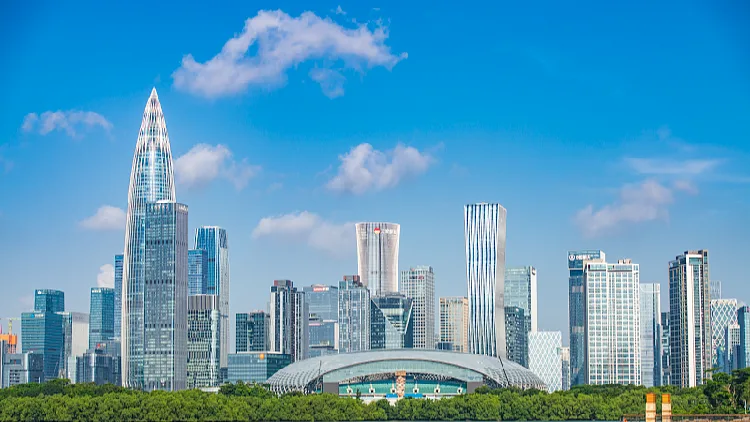
Should you wish to show the APEC member economies what reform, opening up and innovation can achieve within a single generation, there is no better stage than a city that was a border town of just over 30,000 residents in 1980 and is now a metropolis of 18.25 million.
Six years ago, on October 14, 2020, Chinese President Xi Jinping addressed the gathering celebrating the 40th anniversary of the establishment of the Shenzhen SEZ with six requirements for its next chapter: apply the new development philosophy unswervingly; deepen reform across the board; open wider on all fronts; modernize urban governance; put people at the center; and advance the Guangdong-Hong Kong-Macao Greater Bay Area.
Read retrospectively, those six points map neatly onto the three questions any visitor to APEC 2026 will ask: How does Shenzhen keep reforming? How does it stay open? And where does its innovative energy come from? Let's start with reform.
Shenzhen's answer has been to treat reform as an operating system rather than a slogan.
In 2020, the central government entrusted the city with a pioneering comprehensive pilot reform mandate – 27 reform measures and an initial batch of 40 authorized matters, authorizing experimentation in domains from market-based factor allocation to business-environment regulation.
The results show up in the ledger: by the end of 2025, Shenzhen counted 4.65 million registered business entities, equating to roughly one for every four residents.
Moreover, reform also extends to the governance of this megacity: the city has turned its own digital prowess inward, making administration measurably smarter, while channeling resources into job creation, education, health care and housing.
The point of it all is simple enough: growth that people can actually feel.
On openness, Shenzhen has moved from opening its doors to opening its rules like aligning regulations, standards and market access provisions that economists term institutional opening.
此摘要由5News从媒体的公开信息源汇聚而成。 包含完整背景的全文在www.cgtn.com — 内容归CGTN Politics (oficial)所有。