SCO's ecological partnership: Protecting species, restoring ecosystems
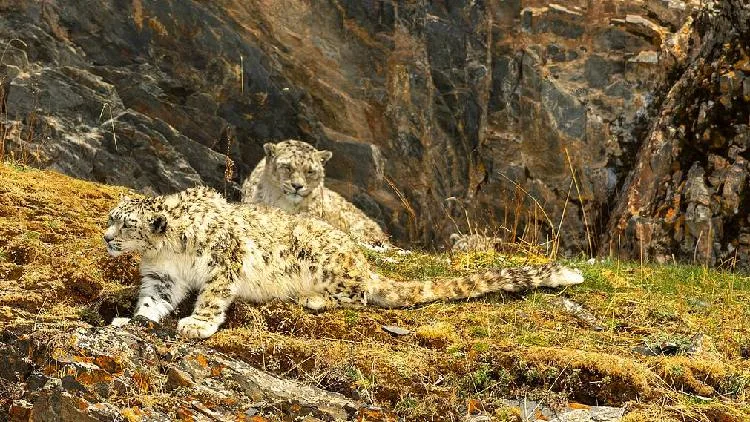
From the high mountains where snow leopards roam to the shrinking landscapes of the Aral Sea, Shanghai Cooperation Organization (SCO) countries are joining hands to tackle ecological challenges through cooperation and shared solutions.
As one of the world's most biodiverse countries and one of the first parties to sign and ratify the Convention on Biological Diversity, China is deepening cooperation with regional partners to advance biodiversity protection and environmental restoration.
Protecting 'king of snow mountains' The snow leopard, known as the "king of the snow mountains," inhabits high-altitude areas from Central Asia to the Qinghai-Xizang Plateau and the Mongolian Plateau.
Many SCO member states are home to the species.
Against the backdrop of climate change and the global biodiversity crisis, protecting snow leopards is critical to maintaining ecosystem stability.
SCO countries and broader Asian range countries have agreed to work together to conserve the species and the natural ecosystem they depend on.
Cooperation dates back to October, 2013, when 12 snow leopard range countries, including China, gathered at the first Global Snow Leopard Conservation Forum in Bishkek, Kyrgyzstan.
They signed the Bishkek Declaration on the Conservation of the Snow Leopard, and launched the Global Snow Leopard and Ecosystems Protection Program (GSLEP) to implement the commitments.
In 2018, the International Snow Leopard Conservation Conference in the southern Chinese city of Shenzhen adopted the Shenzhen Consensus on Global Snow Leopard Conservation.
In 2025, led by World Wildlife Fund for Nature in China (WWF-China) and WWF-Mongolia, the two countries launched the "United for Snow Leopards" project, the first joint snow leopard conservation initiative between China and Mongolia.
The five-year initiative focuses on strengthening international conservation and cooperation, supporting community-led conservation and raising public awareness.
Syed Ghulam Mustafa Shah, Pakistan's Deputy Speaker of the National Assembly, said the country's snow leopard population is recovering, thanks to the cooperation and joint protection among SCO member states.
Recovering 'Dry Tears' of Central Asia The Aral Sea, spanning Kazakhstan and Uzbekistan, was once the world's fourth-largest lake.
Since the 1960s, excessive water use and climate change have caused it to shrink by more than 90%.
此摘要由5News从媒体的公开信息源汇聚而成。 包含完整背景的全文在www.cgtn.com — 内容归CGTN Nature (oficial)所有。