The risks facing migrants on the journey to Europe
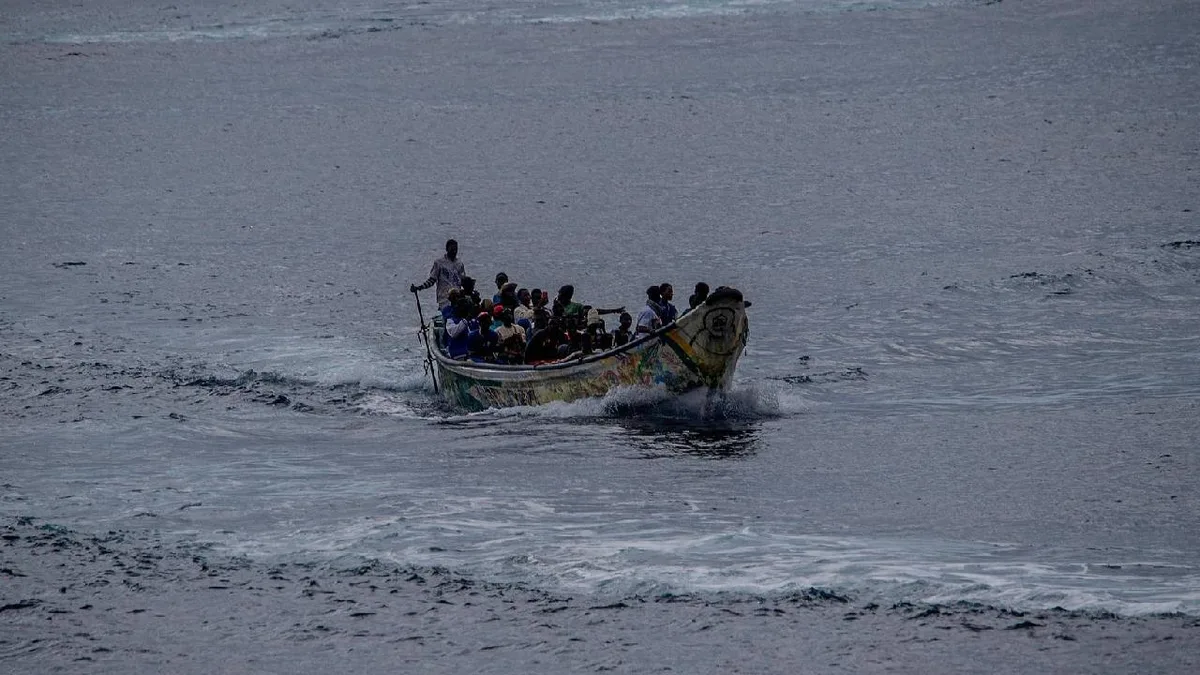
Hundreds of thousands of migrants attempt to travel from Africa to Europe every year in search of economic opportunities or to escape conflict and violence.
Many take perilous routes across the Sahara and Mediterranean, where the risks can be deadly.
The true death toll is unknown, as many incidents go unreported.
But migration experts say the routes are among the world's most dangerous, exposing migrants to harsh conditions, violence and exploitation.
The trans-Saharan routes include three major corridors.
The Western Atlantic corridor runs from West Africa through Mauritania to Western Sahara and southern Morocco.
Another follows the Mali-Algeria-Morocco axis, while a third runs from Niger through Algeria and connects to Libya.
"What people face is a wide range of incidents from extortion at checkpoints, arbitrary detention, kidnapping, physical violence, sexual violence, forced labor, risk of arrest, sometimes dumped in the desert further south again when intercepted by authorities," said Bram Frouws, director of the Migration Center in The Hague.
The International Organization for Migration's Missing Migrants Project has recorded more than 2,000 deaths along the Sahara since 2014.
Experts say the actual number is likely to be significantly higher because many deaths are never reported or documented.
For those who survive the desert crossing, the journey can become even more dangerous as they attempt to cross the Mediterranean into Europe.
Some migrants turn to smugglers, while others try to organize crossings themselves because they cannot afford the fees charged by smugglers.
"The different trajectories of migration don't all include smuggling.
It only happens at the very last bit when people want to cross into Europe and only by those that can afford it," said Miriyam Aouragh, a professor of digital anthropology in Morocco.
此摘要由5News从媒体的公开信息源汇聚而成。 包含完整背景的全文在www.cgtn.com — 内容归CGTN World (oficial)所有。