The 'super seller' behind China's global gaming rise
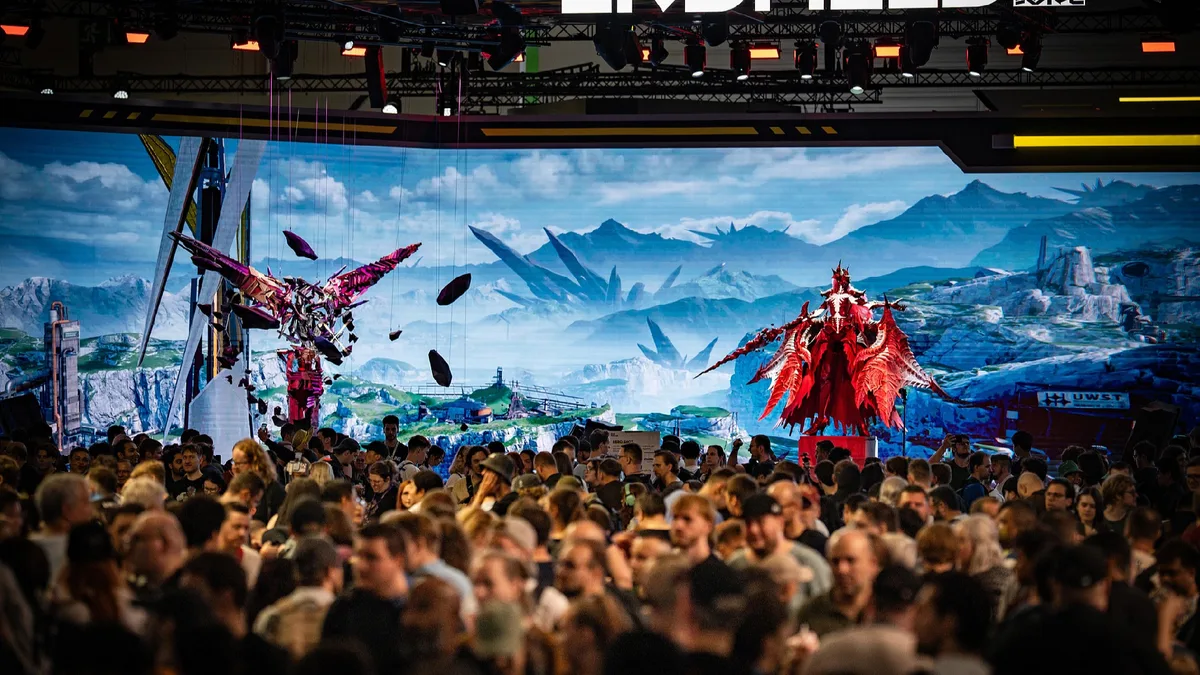
At the recently concluded Gamescom 2026 in Cologne, Germany, 60 Chinese game companies gathered at the event, drawing long lines of players at their booths.
During the opening night, Tencent released new trailers for Roco Kingdom World and Tides of Annihilation. miHoYo made the global debut of its new title Nodus Fall.
Meanwhile, Hypergryph's Arknights: Endfield won the Best Booth Award in a player vote, becoming the first Chinese booth to receive the honor.
The excitement at Gamescom reflects more than a successful exhibition.
It highlights the rapid growth of China's game industry in overseas markets.
Chinese game companies are no longer simply "sellers" pushing individual hit titles for quick returns.
Instead, they are competing through multi-genre portfolios, long-term localized operations and cross-border R&D collaborations, with Chinese-developed games gaining a growing presence in major markets including the US, Japan, South Korea and Europe.
According to the 2026 China Game Industry Report, overseas revenue from self-developed Chinese games reached $12.372 billion in the first half of 2026, up by 30.22% year on year.
The growth outpaced China's domestic game market, with both long-running titles and new releases contributing to the increase.
Behind this growth are several changes in the business models of Chinese game companies.
From hit games to global IPs In the past, the main goal of going overseas was often to sell a successful game in as many markets as possible.
Today, companies are looking further, seeking to build global intellectual properties, or IPs. miHoYo is a good example.
Through its Honkai series, the company has continued to develop different stories and games within a broader fictional universe.
This strategy helps the company build a stable global fan base rather than depend on a single product.
此摘要由5News从媒体的公开信息源汇聚而成。 包含完整背景的全文在www.cgtn.com — 内容归CGTN China (oficial)所有。