Kenya plans maize imports as drought hits key growing areas
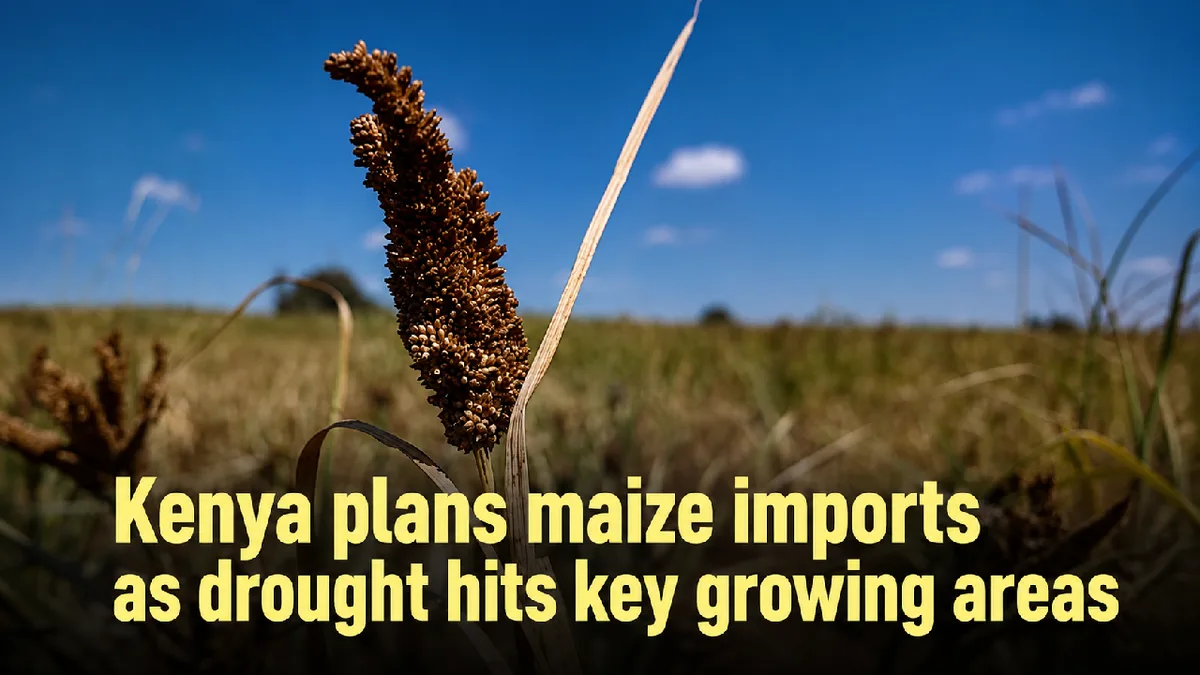
Kenya could be facing renewed food security pressures after failed rains dealt a major blow to maize farmers in the country's North Rift, one of its key food-producing regions.
The North Rift is a major source of Kenya's maize, with the region historically accounting for more than 40% of the country's supply.
A poor harvest there could have consequences far beyond farming communities, potentially putting pressure on maize supplies and pushing up the price of maize flour, a staple for millions of households.
For farmers, the impact is already being felt.
"I have nothing from my farm.
It's a big loss in my pocket.
This is very serious," Victor Kiprop, a farmer said.
Months of inadequate rainfall have left crops struggling during critical stages of growth, raising concerns over how much maize will be available in the coming months.
Kenya Seed Company Managing Director Sammy Chepsiror described the situation as unprecedented in his experience.
"This is very challenging.
In my experience as a government officer, we've not seen a drought of this magnitude affecting farmers directly," he said.
A reduced maize harvest could trigger a chain reaction across Kenya's food markets.
With less grain available locally, demand for maize from other producing regions could increase, while the country may have to rely more heavily on imports to bridge potential supply gaps.
For consumers, that could translate into higher prices for maize flour and other maize-based products.
此摘要由5News从媒体的公开信息源汇聚而成。 包含完整背景的全文在www.cgtn.com — 内容归CGTN World (oficial)所有。