How telemedicine and smart hospitals are enhancing BRICS healthcare
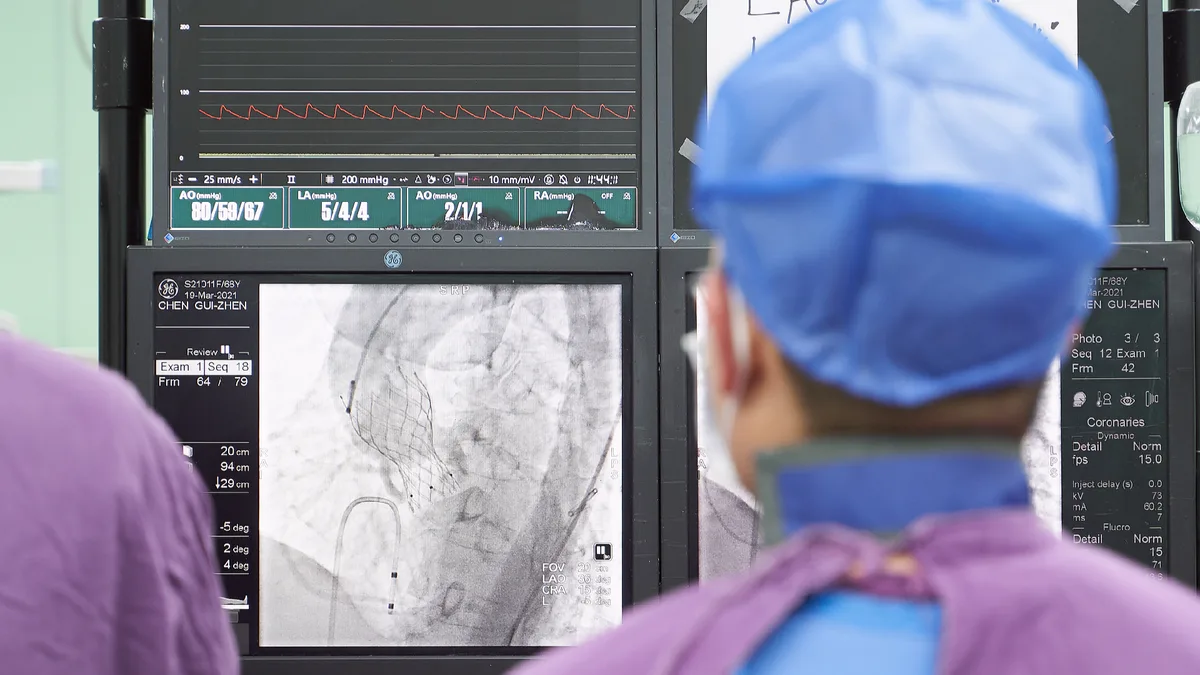
Sitting at a surgical console in Guangzhou, south China's Guangdong Province, an ophthalmologist from the Zhongshan Ophthalmic Center tracks a crystal-clear, real-time 5G video feed.
The doctor guides a robotic arm thousands of kilometers away to perform a painstaking subretinal injection – delivering targeted medication into a paper-thin layer of tissue beneath the patient's retina.
That robotic arm was deployed in an operating room in Urumqi, northwest China's Xinjiang Uygur Autonomous Region, 4,200 kilometers from the control team in Guangzhou.
Lin Haotian, director of the Zhongshan Ophthalmic Center at Sun Yat-sen University, noted that performing such a procedure remotely via robotics marks a clinical milestone, as remote robotic interventions of this precision had not previously been documented.
"The retina is only about 100 to 300 micrometers thick, divided into 10 distinct layers.
Delivering medication precisely between two of those layers is an exceptionally delicate operation," Lin told China Media Group.
The adoption of remote medical robotics in China began in 2019 with its first 5G-assisted orthopedic surgery.
Over recent years, remote medical procedures have expanded across various specialties in Beijing, Shanghai and Zhejiang.
From local reach to nationwide networks These advanced remote procedures reflect a broader expansion of digital health infrastructure across China.
According to China's National Health Commission, the country's telemedicine network now covers all cities and counties, expanding further into rural communities.
Monitoring data shows that 70% of township health centers have established collaborative telemedicine partnerships with higher-level hospitals.
Alongside the physical infrastructure, AI-driven applications are increasingly integrated into daily clinical workflows.
At Ruijin Hospital, affiliated with the Shanghai Jiao Tong University School of Medicine, an AI pathology platform assists doctors by scanning digital slides and highlighting potential lesions in seconds – a process that manually takes around 40 minutes per slide.
Furthermore, a report by KPMG, a global network of professional services firms, indicates that China accounts for over 70% of the world's published medical large language models.
此摘要由5News从媒体的公开信息源汇聚而成。 包含完整背景的全文在www.cgtn.com — 内容归CGTN Tech & Sci (oficial)所有。