A new American economy emerges from the Fed's September minutes
Editor's note: Liu Chunsheng is associate professor at the Beijing-based Central University of Finance and Economics.The article reflects the author's views and not necessarily those of CGTN.
On October 7, the US Federal Reserve released the minutes of its September 15-16 monetary policy meeting.
The minutes' significance lies less in what the Federal Open Market Committee (FOMC) did—a unanimous 25-basis-point hike that lifted the federal funds target range to 3.75%-4.00%—a move the market had already absorbed; and more in terms of the signal they carried, with most participants judging that "further increases" in the target range before year-end "would likely be appropriate." Growth accelerates while jobs stay still The most immediate impression from the minutes is that the US economy is more robust than expected.
Participants broadly described activity as "expanding at a solid pace," underpinned by strong business investment and resilient consumer spending, with several even judging that the economy's "underlying momentum" had increased.
Capital spending tells the story best: the four-quarter change in equipment and intangibles investment ran near 9%, the fastest since 2021, while S&P 500 profits grew roughly 20% over the past year with margins at historic highs.
Consumption held firm too, real spending rose over 2% over four quarters, and the cleanest gauge of domestic demand, private domestic final purchases, advanced at nearly 3%.
Yet set against this revving growth engine is the eerie stillness of the labor market.
Several participants noted that indicators such as hiring and layoff rates, job finding success, and long-term unemployment showed labor market "dynamism" remained unusually low.
This is the paradox of today's American jobs market—neither overheating nor collapsing, but "full employment with low fluidity." It shows up as low unemployment paired with low hiring.
With aging demographics and slowing net immigration capping labor supply growth, monthly payroll gains are naturally small.
For the Fed, this structure means the labor market is no longer something to "cool down" but a fragile asset to protect from harm.
The case for hikes therefore rests almost entirely on the prices.
Price pressures wear a new face If employment lets the Fed exhale, inflation is its true anxiety.
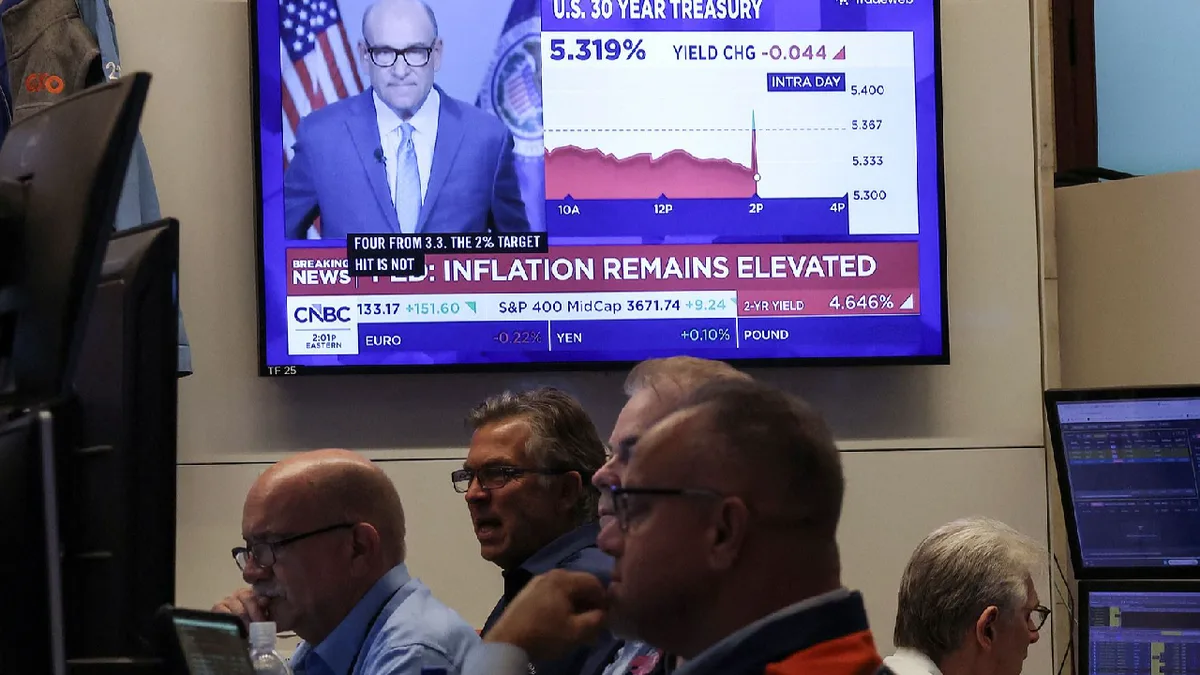
The minutes repeatedly stress that inflation "remained elevated" relative to the 2% target and that "insufficient progress" had been made in recent months.
此摘要由5News从媒体的公开信息源汇聚而成。 包含完整背景的全文在www.cgtn.com — 内容归CGTN Business (oficial)所有。