Responsible AI: China's policy and practice
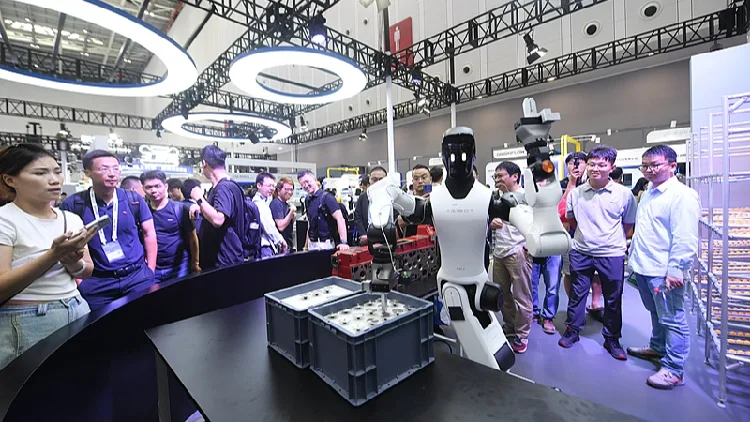
Foundation models are advancing fast.
So are the risks – deepfakes, safety failures, and the difficulty of keeping up.
China's answer is a mix of national policy, public interest projects like the AI Plus Initiative, and a call for international cooperation.
The policy China's approach starts at the top.
President Xi Jinping set the direction for AI development at the 20th group study session of the Political Bureau of the CPC Central Committee on April 25, 2025: a whole-of-nation effort, self-reliance and innovation that serves a purpose.
AI should develop in a beneficial, safe and fair manner, he said.
During the same session, President Xi also called for better laws, industry standards and ethics, and a mechanism covering technical monitoring, early warning and emergency response, so AI stays safe, reliable and controllable.
At the opening ceremony of the 2026 World Artificial Intelligence Conference (WAIC) and High-Level Meeting on Global AI Governance in July, Xi's message was similar: AI should be people-centered and a driver for shared prosperity and security.
The practice China steers AI toward public uses rather than bigger models or pure commercial expansion.
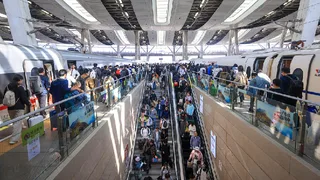
AI-assisted traffic management and weather risk monitoring in southwest China are two examples of the technology applied to city operations and public safety.
The governance China is pursuing its own breakthroughs in AI theory, chips and software, while opposing decoupling and bloc confrontation.
Its open-source large language models are available to developers worldwide.
Domestically, the rules aim for balance between innovation and risk control.
The Interim Measures for the Administration of Generative Artificial Intelligence Services, in force since August 2023, and mandatory labeling for AI-generated content, target deepfakes without smothering the industry.
此摘要由5News从媒体的公开信息源汇聚而成。 包含完整背景的全文在www.cgtn.com — 内容归CGTN China (oficial)所有。