BRICS and Global South: Multilateralism, development and shared future
Editor's note: Lidia Fagale is a journalist at Clave China Radio and the news portal www.clavechinanoticias.com.
The article reflects the author's opinions and not necessarily the views of CGTN.
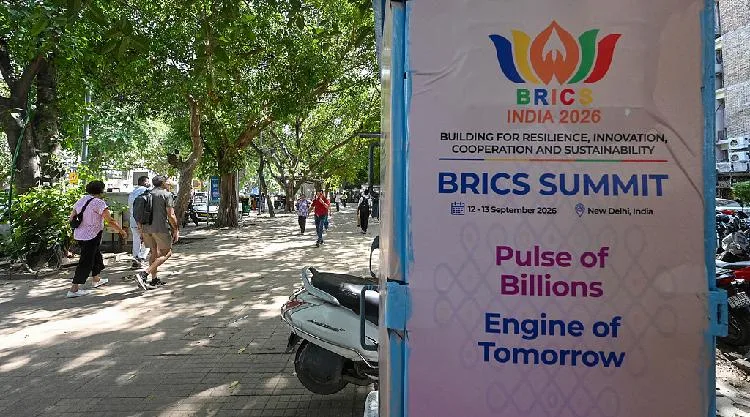
The 18th BRICS Summit, held in New Delhi on September 12–13, 2026, marks an important milestone in deepening South-South cooperation and advancing global governance toward a more equitable model that is more responsive to the needs of developing countries.
Against an international landscape characterized by growing complexity and rapid transformation, BRICS continues to demonstrate its capacity for adaptation and integration in pursuit of common progress.
The experience of the Shanghai Cooperation Organization (SCO), whose summit was recently held in Bishkek, Kyrgyzstan, offers a valuable reference for how mutual trust, equality and open consultation, supported by a solid institutional foundation and a long-term strategic vision, can serve as effective pillars for consolidating large-scale multilateral groupings.
Under the theme "Building for Resilience, Innovation, Cooperation and Sustainability," India's BRICS presidency seeks to place the priorities of the Global South at the heart of the international agenda, which is in need of constructive dialogue and maturity in managing differences and safeguarding peace and stability.
Against the backdrop of a transition toward more equitable global governance, China's proposals have taken on structural significance.
The Global Development Initiative has emerged as an important driving force for accelerating the implementation of the United Nations 2030 Agenda for Sustainable Development, with priority given to poverty reduction and financing for the development of critical infrastructure across the Global South.
This vision is complemented by the Global Security Initiative , which advocates common, comprehensive, cooperative and sustainable security, based on the principle that no country should pursue its own security at the expense of others.
Meanwhile, the Global Civilization Initiative promotes respect for the diversity of development paths and intercultural dialogue, rejects the imposition of a single model, and reaffirms the right of every people to independently choose its own path and future.
Innovation and high technology represent the new frontier of South-South cooperation.
In the face of contemporary trends toward technological fragmentation, the construction of artificial barriers ("small yards with high fences") and "decoupling policies" that risk widening the digital divide, BRICS advocates an open, fair, equitable and non-discriminatory global technological ecosystem.
此摘要由5News从媒体的公开信息源汇聚而成。 包含完整背景的全文在www.cgtn.com — 内容归CGTN Business (oficial)所有。