September 18 Incident at 95: Beware of resurgent militarism in Japan
Editor's note : Xiang Haoyu is a specially appointed research fellow at the Department for Asia-Pacific Studies, China Institute of International Studies.
The article reflects the author's opinions and not necessarily the views of CGTN.
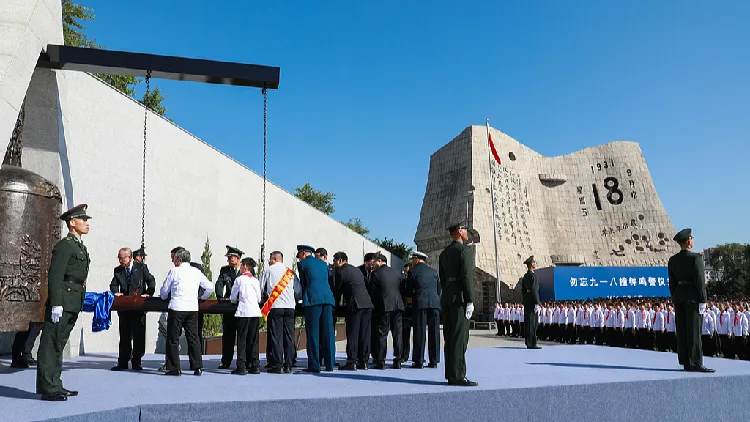
September 18 marks the 95th anniversary of the outbreak of the September 18 Incident.
The incident not only served as a prelude to Japanese militarism’s brutal invasion of China and other Asian nations, but also destroyed the international system of the time, plunging the entire Asia-Pacific region into the bottomless abyss of war.
At this solemn juncture, a time for deep reflection on wartime tragedies and renewed pledges for peace, a close look at the current situation in East Asia inevitably evokes deep concern.
Recently, a string of unusually dangerous developments have emerged in quick succession within Japan's political and defense circles, such as right-wing conservatives gaining power in local elections, top defense officials openly coveting nuclear armaments and frequent joint regional military drills. and words and deeds that challenge the post-war international order.
All those suggest that Japan's ruling authorities and right-wing factions are accelerating their break from the post-war system and deviating further from the path of peaceful development.
Challenging the postwar international order The post-war international order, with the United Nations at its core, was built precisely upon the defeat of Japanese militarism by the world anti-fascist alliance and hard-won lessons drawn from the war.
Nevertheless, Japan's recent diplomatic rhetoric and actions clearly expose a dangerous attempt to challenge the fundamental bottom line of this very order.
Recently, the Japanese government brazenly demanded that Russia dismantle a monument dedicated to the victory over Japanese militarism, citing the absurd justification that the monument's design "hurt the feelings of the Japanese people." Concurrently, Japanese officials have claimed that the "Enemy State Clauses" in the UN Charter are outdated and hollow in practice.
These are by no means isolated diplomatic disputes; rather, they are a concentrated manifestation of the long-standing attempts by Japan's right-wing forces to whitewash its history of aggression and reverse historical verdicts.
As a special institutional arrangement for defeated World War II nations, the core legal logic behind the "Enemy State Clauses" is to prevent the resurgence of fascism and militarism.
They constitute political and legal guardrails put in place by the international community to sustain enduring peace.
此摘要由5News从媒体的公开信息源汇聚而成。 包含完整背景的全文在www.cgtn.com — 内容归CGTN World (oficial)所有。