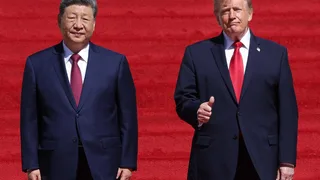
US-China AI rivalry needn’t preclude cooperation
Forcing countries to choose between the US’ and China’s initiatives would be counterproductive to global AI governance
Artificial intelligence (AI) poses risks that do not respect national borders, from cyberattacks and misinformation to system malfunction and potentially dangerous misuse. In a geopolitically charged world, does greater incompatibility between countries make AI safer?
UN Secretary General Antonio Guterres offered a clear answer at the inaugural UN Global Dialogue on AI Governance: “When countries align on how to test systems, measure risk and assign responsibility, safety travels with the technology.” By contrast, “a patchwork of incompatible rules raises costs, divides the world – and protects no one”.
Both initiatives overlap but do not primarily seek to address the same problems. Waico can promote development and cooperation while strengthening China’s influence in global AI governance; Pax Silica can address genuine concerns about critical technologies and supply-chain resilience while consolidating a US-centred network of trusted partners.
Because these initiatives come from fierce competitors, an analytical problem arises when geopolitical rivalry is treated as sufficient to explain their entire meaning.
此摘要由5News从媒体的公开信息源汇聚而成。 包含完整背景的全文在www.scmp.com — 内容归South China Morning Post - China所有。