September 18 Incident: A pivotal moment in the World Anti-Fascist War
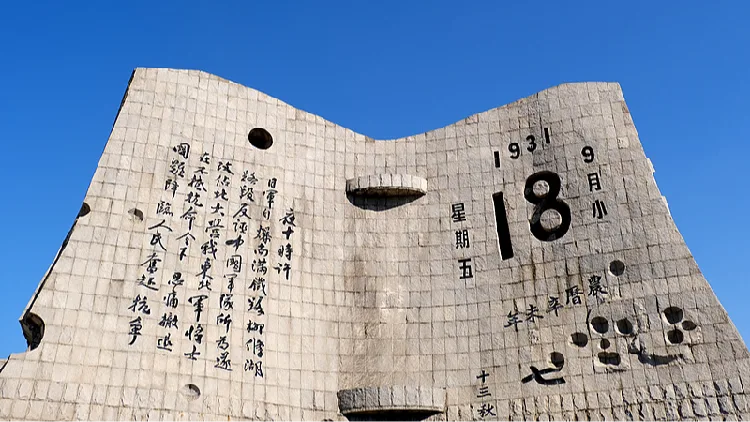
Friday marks the 95th anniversary of the September 18 Incident, the beginning of China’s 14-year War of Resistance Against Japanese Aggression.
Also known as the Mukden Incident, it began on the night of September 18, 1931, when troops from Japan’s Kwantung Army detonated explosives on a section of the South Manchuria Railway at Liutiaohu, on the northern outskirts of Shenyang, the capital of northeast China’s Liaoning Province.
Japanese troops falsely blamed Chinese forces for the explosion and used it as a pretext to attack the nearby Beidaying barracks and bombard Shenyang.
The city fell to Japanese forces the following day.
In the months that followed, Japanese forces overran northeast China.
In 1932, Japan established the puppet state of Manchukuo in the occupied territory.
Chinese resistance began in 1931, while full-scale war between China and Japan broke out in July 1937 following the Marco Polo Bridge Incident near Beijing.
The war continued until Japan’s surrender in 1945.
A precursor to World War II, the September 18 Incident marked an early chapter in the global struggle against fascist aggression.
China suffered more than 35 million military and civilian casualties during the 14-year conflict, accounting for roughly one-third of total casualties worldwide during World War II.
此摘要由5News从媒体的公开信息源汇聚而成。 包含完整背景的全文在www.cgtn.com — 内容归CGTN China (oficial)所有。