US sanctions, global costs
Editor's note: Wang Jin is the director of the Center for Strategic Studies at Northwest University, a special researcher for Beijing Club for International Dialogue and an expert on the Middle East.
The article reflects the author's opinions and not necessarily the views of CGTN.
After six months of military threats and conflict, the United States have launched a large-scale campaign of economic pressure against Iran.
The new US sanctions against Iran extend beyond the financial and oil sectors, expanding secondary sanctions to five major areas – digital assets, gold, aviation, shipping and technology – and increasing time-bound pressure on third countries.
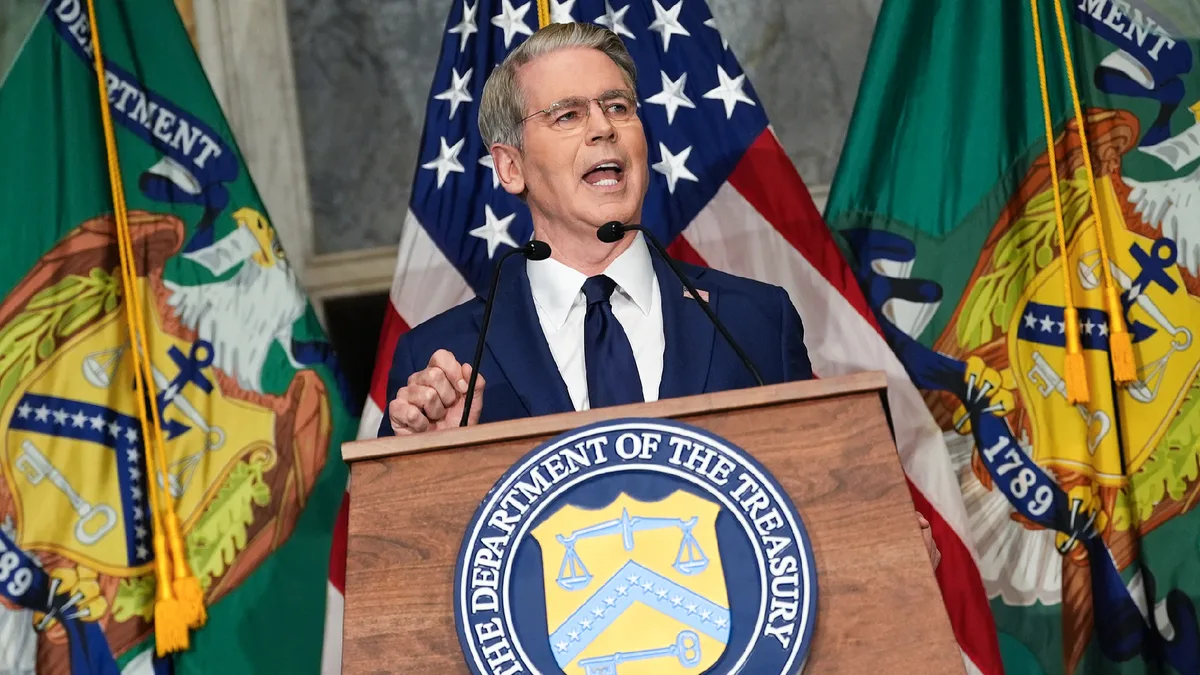
US Treasury Secretary Scott Bessent has also stated that the United States will launch the largest economic isolation campaign in history, demanding that countries choose sides in their trade relations with Iran.
Why is US shifting to economic war? The primary reason the United States is imposing enormous military pressure on Iran is that it seeks both to maintain sustained pressure on Tehran and to escape the enormous costs generated by continued military conflict.
On the one hand, the United States needs to maintain strong strategic pressure on Iran and sustain a high-pressure posture in the hope of forcing Tehran, under pressure, to seek dialogue with Washington and make concessions, thereby avoiding domestic criticism in the United States for ending the war in Iran too hastily.
On the other hand, six months of military conflict and intense direct confrontation have imposed strategic costs that are increasingly difficult for the United States to bear.
US warfighting resources, air-defense missiles and strategic missiles are becoming insufficient to sustain high-intensity operations over the long term, and the United States can no longer rely solely on military means to force Iran to make concessions.
Against this backdrop, shifting toward economic pressure to compel Iran to make concessions has become an increasingly important strategic option for Washington.
How will economic pressure be implemented? The US shift toward economic pressure will broadly be implemented through three measures.
First, the US will maintain a maritime blockade of Iran.
It will keep naval forces stationed around Iran and seek to intercept Iranian vessels, thereby disrupting Iran's economic links with the outside world.
Second, the US will impose sanctions on Iran in five areas – digital assets, technology, gold, aviation and shipping – while also targeting nuclear and missile technology procurement networks, cyberattack operations, oil revenues and the shadow fleet.
此摘要由5News从媒体的公开信息源汇聚而成。 包含完整背景的全文在www.cgtn.com — 内容归CGTN World (oficial)所有。