Niger’s leather artisans struggle as insecurity hits sales
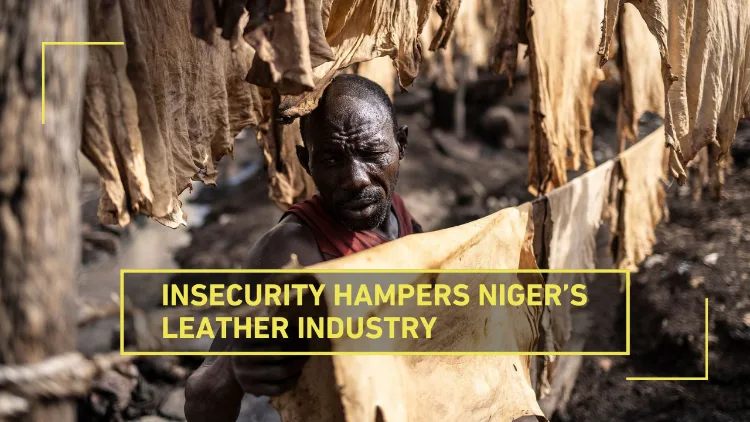
In Niger, tanning is more than a traditional craft.
Thousands of families rely on the industry to earn a living, allowing the skill to be passed down through generations.
Artisans at the Gamkallé tannery in Niamey have maintained the use of traditional methods to transform animal hides into leather, which is then used to make shoes, bags, wallets, purses and other products.
The industry is, however, under threat from growing insecurity, which has disrupted supply chains and limited access to markets, ultimately reducing sales.
Ismael Ousmane, who has worked at the Gamkallé tannery for years, says tanning remains an important part of his life and helps support his family.
"Tanning is a tradition.
It's a job that makes me proud," he said.
Traditional craft under pressure The tannery is one of the oldest in Niamey and currently employs nearly 200 people across its various workshops.
Hides collected from slaughterhouses across the capital and surrounding areas are processed through several stages.
They are soaked, rinsed, treated and dried before undergoing further finishing.
Abdoukadri Zoubeirou, a tannery worker, says the process remains largely traditional.
"After the other stages, the hide is soaked for a few hours before being rinsed, then sprinkled with salt and peanut cake.
It is then laid out to dry and undergoes the remaining stages of finishing," he says.
But despite the continued demand for leather products, the cooperative says business has fallen sharply.
此摘要由5News从媒体的公开信息源汇聚而成。 包含完整背景的全文在www.cgtn.com — 内容归CGTN World (oficial)所有。