Reporter's Diary: Kenyan urbanites brace for El Niño
Anyone who has lived in Nairobi for a few years knows the feeling of anxiety when weather reports warn of an impending El Niño.
I remember past flash floods all too well; main roads turning into rushing rivers within minutes, traffic sitting still for hours, and families in low-lying areas losing their homes and belongings.
But as I moved around the Kenyan capital filming my story for CGTN, I saw something that surprised me.
For the first time in a long while, the city isn't just sitting back and waiting to be flooded.
There is an active, urgent effort happening right under our feet.
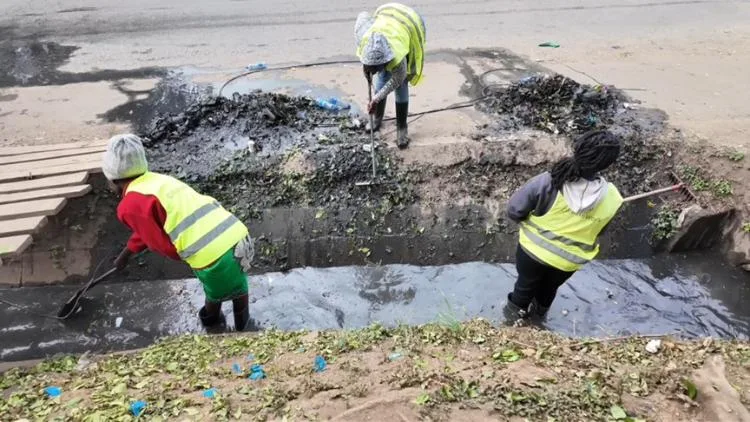
I watched workers in bright reflective vests pull up heavy concrete slabs.
I smelled the damp earth as they dug out thick piles of plastic bottles, mud, and garbage that had been trapped under the drainage lines for months.
Beyond digging out trash, I also saw crews laying down new concrete water paths and installing big sewer pipes to redirect heavy rainwater away from neighborhoods.
While filming my story, I had a sit-down chat with Bramwell Simiyu, Nairobi's Chief Officer for Disaster Management and Coordination.
He didn't make excuses for the city's past failures.
He told me directly that blocked waterways were the main cause of previous flood disasters.
"As you know, part of the reason we have had flooding in the past has been cases of the drainage system, the waterways, the pathways, that have been blocked or clogged," Simiyu explained.
"So, we have a subcommittee that has focused on ensuring that we clear and clean up the drainage systems, and we are able to repair some of the clogged parts that we have identified." What touched me most was his point that the city is focusing on real human lives, not just maps and engineering plans.
"We have gone around and identified all the hot-spots from a humanitarian perspective," he said.
此摘要由5News从媒体的公开信息源汇聚而成。 包含完整背景的全文在www.cgtn.com — 内容归CGTN World (oficial)所有。