Ethiopia turns overlooked beeswax into a growing source of income
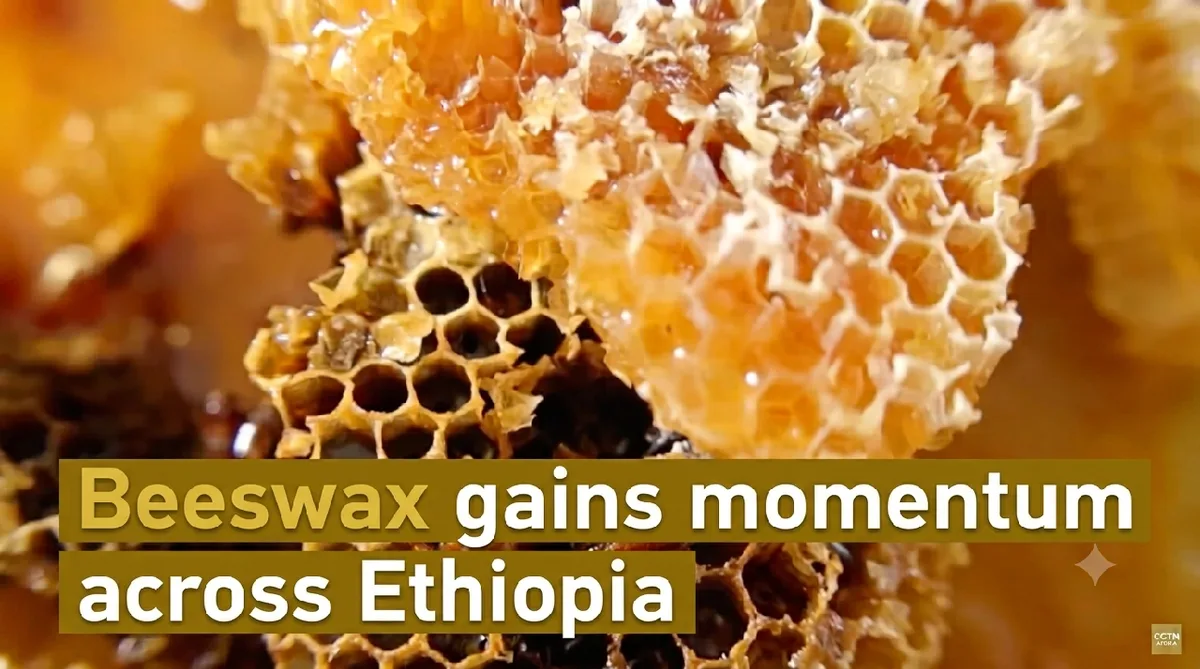
Ethiopia is Africa's leading honey producer, with millions of beehives across the country.
But inside every hive lies another valuable product that was once largely overlooked — beeswax.
For many beekeepers, wax was traditionally treated as waste because the returns were too low to justify the effort of collecting and selling it.
"It was very cheap, and we would often throw it away because the price was not worth the effort of taking it to market.
But now it is no less important than honey.
We collect it and keep it with care, and it is earning us additional income in some cases even more than honey.
We used to sell a kilo of wax for 200 to 300 birr; now it is more than 1,500 birr ($9.35), depending on quality," said beekeeper Wasihun Temesgen.
The growing value of beeswax is being driven by rising domestic demand.
Once used mainly for export, the product is increasingly being used in Ethiopia’s domestic industries, including soap, cosmetics and pharmaceutical products.
"Previously there was little local use of wax; it was only exported.
But now local demand is growing significantly, as it is being used to produce soap, cosmetics and pharmaceuticals.
That demand has now reached an industrial scale," sais Tesfaye Baye a beeswax producer.
Despite the growing interest, Ethiopia’s beeswax sector remains largely underdeveloped.
The country produces an estimated 5,000 tonnes of beeswax annually, but market data indicates that only a small fraction reaches international markets.
此摘要由5News从媒体的公开信息源汇聚而成。 包含完整背景的全文在www.cgtn.com — 内容归CGTN World (oficial)所有。