Virtual reality brings Long March history to life
In China, new technology is bringing history to life.
One of the most famous episodes of the Red Army's Long March, the capture of Luding Bridge, is now more tangible than ever, thanks to virtual reality.
Just steps from the real Luding Bridge, a company has developed an immersive VR experience that transports visitors back to 1935.
The actual bridge is 103.67 meters long and 3 meters wide, suspended from 13 iron chains.
Nine bottom chains with wooden planks form the walkway, and four side chains serve as handrails.
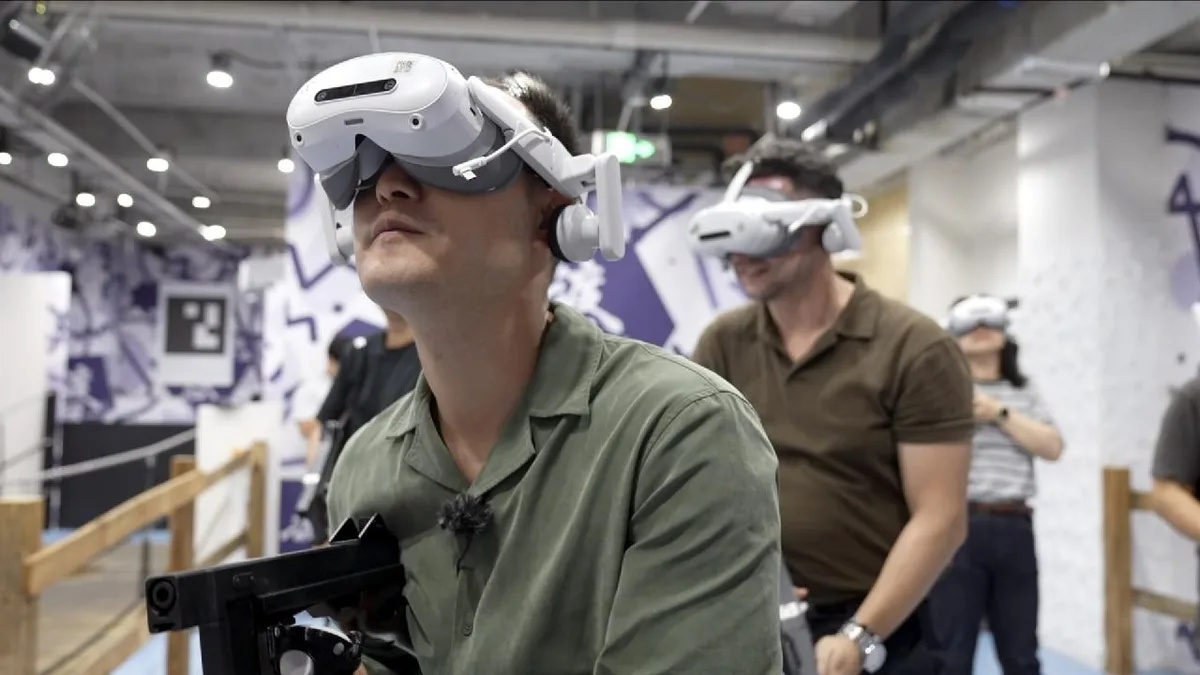
In the VR experience, visitors wear a headset and hold a replica rifle as they join the Red Army.
They climb across the iron chains under enemy fire, just as the brave soldiers did.
The technology behind it is remarkable.
The project uses sub-millimeter precision spatial positioning and a "parallel universe" system that folds a 100-meter virtual bridge path into a smaller physical space, so visitors feel like they are walking across the entire iron chain bridge.
A 280-person production team spent seven months on the project.
The project's operator says it has received 45,000 visitors since it opened in June, 2025.
Visitors wear headsets for VR experience of the Red Army's capture of Luding Bridge, Luding County, Ganzi Tibetan Autonomous Prefecture, Sep.
10, 2026.
Zhang Yize / CGTN Visitors wear headsets for VR experience of the Red Army's capture of Luding Bridge, Luding County, Ganzi Tibetan Autonomous Prefecture, Sep.
此摘要由5News从媒体的公开信息源汇聚而成。 包含完整背景的全文在www.cgtn.com — 内容归CGTN China (oficial)所有。