How BRICS pools development strength for high-quality cooperation
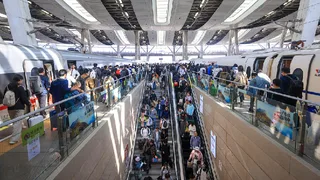
In February this year, an 82.15-km Regional Rapid Transit System in India, also known as the Namo Bharat line, went fully operational, connecting the National Capital Territory of Delhi with the cities of Ghaziabad and Meerut in Uttar Pradesh.
Journey time between Delhi and Meerut during peak hours has been slashed from four hours by driving in the past to roughly one by rail today.
Financed in part by the New Development Bank (NDB), a flagship BRICS initiative, the project is more than a transport upgrade – it is a tangible example of how greater BRICS cooperation can translate financial resources into development outcomes.
Since its inception in 2006, BRICS has grown to 11 members and 10 partner countries, turning diversity into a source of cooperation and development momentum.
"Over the past two decades, the BRICS cooperation mechanism has continued to grow and expand and has demonstrated remarkable vitality and dynamism," Chinese President Xi Jinping said while addressing Session I of the 18th BRICS Summit in New Delhi on Saturday.
He called on BRICS countries to stand on the right side of history, strive to be a pioneer of the times, steer the international order toward greater justice and equity, and work together to build a community with a shared future for humanity.
High-quality development of greater BRICS cooperation Over the past 20 years, BRICS members and partner countries have increasingly leveraged their respective strengths through open and mutually beneficial cooperation.
What began as an economic cooperation mechanism has developed into a robust platform covering trade, investment, finance, innovation, energy, agriculture and people-to-people exchanges.
For many developing economies, access to affordable, long-term funding remains critical to turning development ambitions into reality.
The NDB, headquartered in Shanghai, has helped provide such an option by mobilizing resources for infrastructure and sustainable development projects.
Figures released by the bank showed that by the end of the first quarter of 2026, the NDB had approved $42.9 billion in financing for 140 projects.
Covering areas like infrastructure, clean energy and digital transformation, these projects address the pressing development needs of Global South countries while echoing the priorities highlighted by the theme of the ongoing BRICS Summit, "Building for Resilience, Innovation, Cooperation and Sustainability." The results can be seen in everyday economic activity.
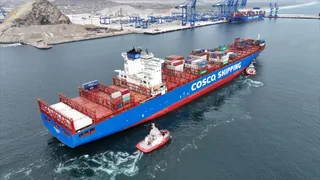
Chromite ore mined in South Africa is smelted into premium stainless steel plates at Chinese factories before finding its way into precision equipment workshops in India's Bengaluru.
Chinese-made modern harvesters work across farmland in Brazil, whose soybean produce feeds global markets.
此摘要由5News从媒体的公开信息源汇聚而成。 包含完整背景的全文在www.cgtn.com — 内容归CGTN China (oficial)所有。