For orangutans, saving forests means saving lives
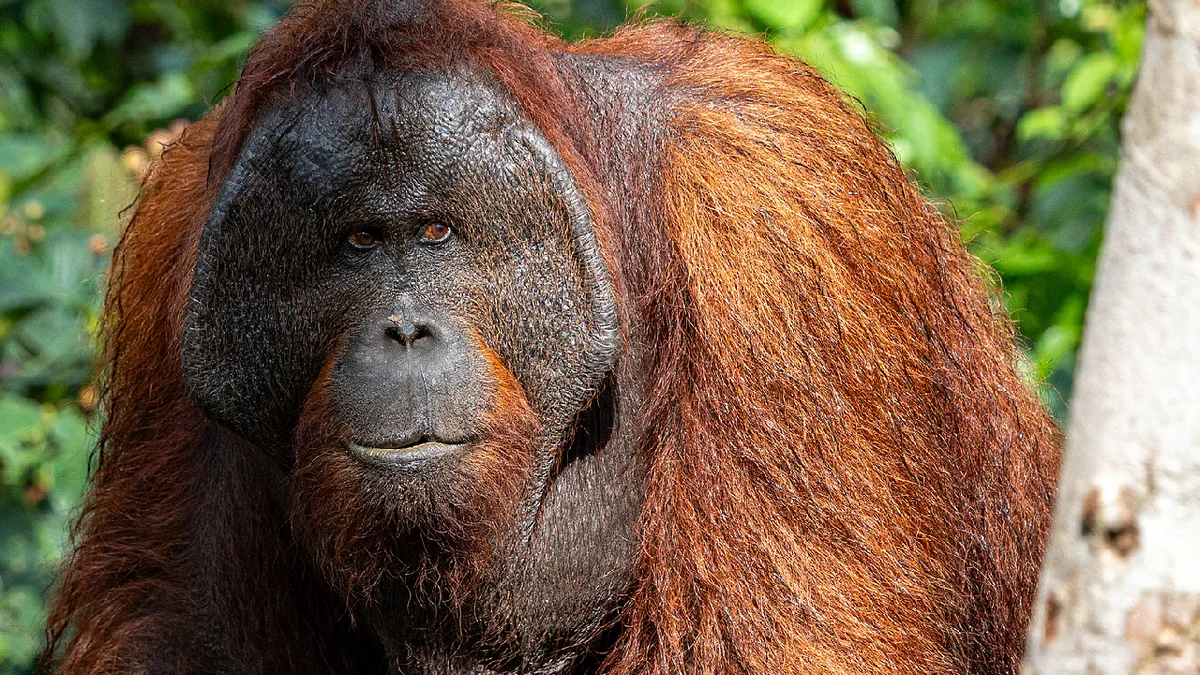
August 19 marks International Orangutan Day, an annual occasion to raise awareness of the primates and the need to protect their natural habitats.
Wild orangutans are found only on the islands of Borneo and Sumatra in Southeast Asia, where the three surviving species face growing pressure from habitat loss and other human activities.
Protecting forests is therefore central to orangutan conservation.
In Malaysia's Sarawak, a conservation project launched in 2021 is establishing a 389-hectare wildlife corridor linking Gunung Lesong and Ulu Sebuyau national parks, helping improve habitat connectivity and reduce fragmentation.
The project also promotes agroforestry on 790 hectares of community land.
In the Ulu Sungai Menyang Special Conservation Area, native trees have been planted on degraded and fallow agricultural land since 2017 to create a buffer between communities and core orangutan habitat.
Scientific monitoring is another important part of conservation.
In Malaysia's Sabah, the Sabah Wildlife Department and its partners conduct orangutan surveys to assess population distribution and size, including surveys in protected and non-protected areas.
Recent field expeditions have covered sites including Tawau Hill Park, Tabin Wildlife Reserve and Tawai Forest Reserve.
The challenges can be devastating.
A report cited by Reuters found that floods and landslides in 2025 killed at least 58 critically endangered Tapanuli orangutans in the western block of Sumatra's Batang Toru forest, equivalent to at least 7% of an estimated wild population of about 800.
Dr.
Biruté Mary Galdikas, a pioneering orangutan researcher and conservationist, died on March 24, 2026, at 79.
After more than five decades of work, she left a lasting legacy through Orangutan Foundation International, which she established with associates in 1986 and which continues research, rehabilitation and conservation work.
此摘要由5News从媒体的公开信息源汇聚而成。 包含完整背景的全文在www.cgtn.com — 内容归CGTN Nature (oficial)所有。