How foreign brands benefit from China's consumer trade-in program
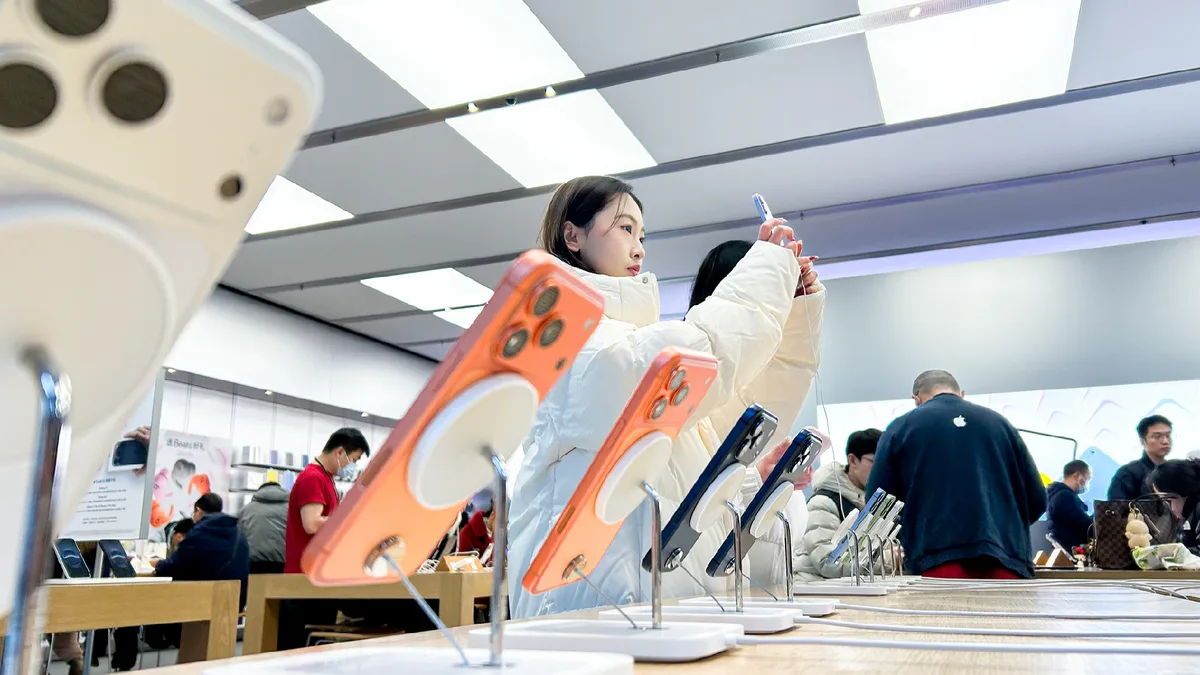
China's consumer trade-in program has expanded since 2025 to cover vehicles, home appliances, mobile phones, tablets and other digital products.
Foreign brands have been able to participate alongside domestic brands.
Apple provides a clear example.
When subsidies for mobile phones took effect in January 2025, eligible iPhone models were included in the program.
A 128GB iPhone 16 was available for 4,699 yuan (about $700) after a 500-yuan subsidy at Apple's official store on JD.com, according to China Media Group.
The subsidy applied to eligible products priced at no more than 6,000 yuan, at 15% of the final selling price, capped at 500 yuan.
Foreign automakers have also participated.
In January 2026, consumers were seen visiting a Tesla store in Wuhan after the new round of vehicle trade-in subsidies took effect.
The program offered subsidies of up to 20,000 yuan for scrappage replacement and 15,000 yuan for trade-in replacement, subject to eligibility requirements.
Official figures show the scale of foreign-brand participation.
On June 22, Ling Ji, vice minister of Commerce and Deputy China International Trade Representative, said foreign auto brands accounted for more than 35% of new vehicle sales under the trade-in program.
Foreign brands accounted for more than 13% of new purchases of home appliances, digital products and smart products.
He also said China supports foreign-invested companies in participating in consumer trade-in policies on an equal basis.
The equal-treatment principle is also reflected in the policy rules.
此摘要由5News从媒体的公开信息源汇聚而成。 包含完整背景的全文在www.cgtn.com — 内容归CGTN World (oficial)所有。