Road crews hit toughest stretch in Gyirong mudslide rescue
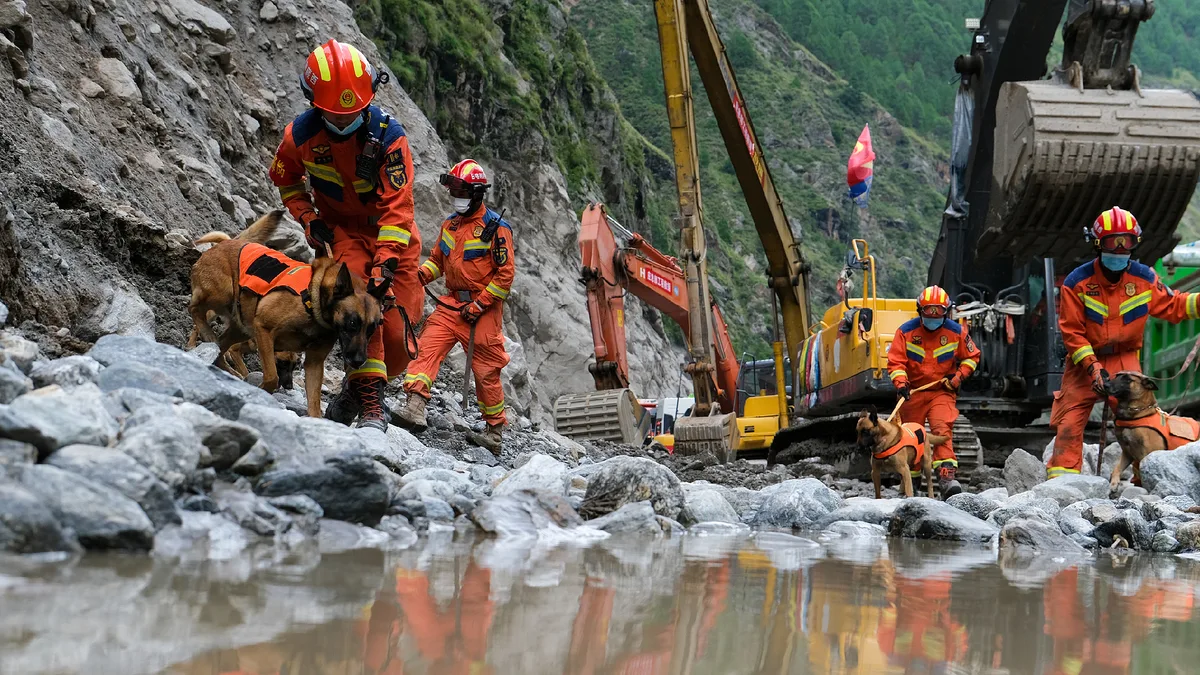
Road clearance crews had reached the final kilometer of the road to mudslide-hit Gyirong Port in southwest China's Xizang Autonomous Region by 5 a.m. on Tuesday, but the last stretch is the hardest.
The work is focused on a sharp bend of the G216, where tight space and strong river currents are slowing progress.
At the same time, helicopters are flying specialist rescuers and supplies to the disaster zone, with firefighters, immigration police and health and disease-control personnel stepping up the search for the missing.
Some residential buildings at the port have been buried under up to two meters of mud and rock.
Rescuers are using life-detection equipment to search for survivors beneath the debris.
China has mobilized 2,141 rescuers, 269 vehicles and 3,922 pieces of equipment to the devastated area, after a mudslide triggered by an ice-rock avalanche in Nepal on August 26 left 16 people dead and 546 missing in Gyirong County.
G216 road clearance enters toughest stretch The current worksite is located at a wide river bend.
Limited space and swift currents have slowed progress.
The mudslide has raised the riverbed and altered the channel, pushing water toward the original road.
As a result, rescue teams are not just clearing debris, but effectively "building" a new road in the river.
Workers are placing steel-reinforced gabion cages and culvert pipes into the river to build up the roadbed and prevent fill material from being washed away.
Meanwhile, the steep terrain and narrow valleys at Gyirong Port leave little room for maneuvre.
Adding more machinery alone cannot significantly speed up the work.
China Anneng, a Chinese emergency response and disaster relief company, has deployed 158 personnel and 28 pieces of heavy equipment on the ground, including excavators and loaders.
此摘要由5News从媒体的公开信息源汇聚而成。 包含完整背景的全文在www.cgtn.com — 内容归CGTN Nature (oficial)所有。