How China is strengthening international health partnerships
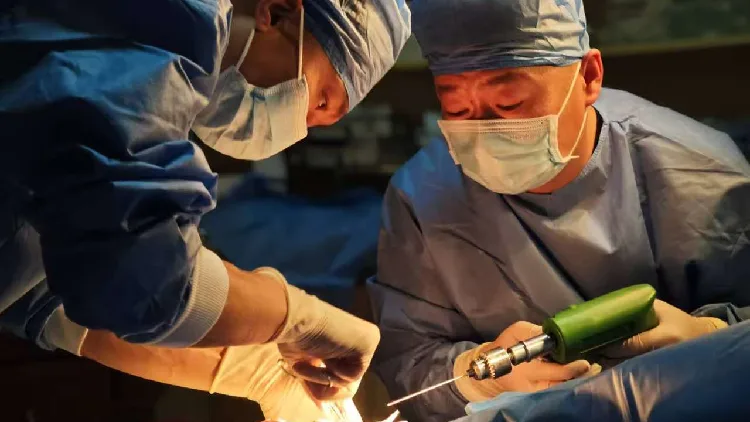
In a regional hospital in Benin's southwestern city of Lokossa, obstetrician Tu Jinzhi and her local team faced a high-stakes emergency: an HIV-positive pregnant woman carrying a fetus with a severe congenital skull malformation.
With local prenatal screening and infection prevention systems constrained by limited resources, there were extreme risks of surgical complications and occupational exposure.
Through precise execution and strict protective protocols, Dr.
Tu delivered the infant safely while keeping both mother and child stable.
The complex rescue addressed a critical vulnerability in local maternal care – a single case that reflects a decades-long commitment.
Twenty-eight Chinese medical teams totaling 662 personnel have served in Benin since 1978, all dispatched by northwest China's Ningxia Hui Autonomous Region, building a foundation of healthcare support in the West African country.
This operation in Lokossa reflects a broader trend in international medical aid – moving beyond emergency clinical interventions toward clinical mentorship, long-term capacity building and collaborative disease control.
On the frontlines of daily care Beyond emergency care, Chinese medical teams are increasingly integrated into the daily operations of host hospitals.
In Seychelles, a six-member team covering orthopedics, surgery, neurology, radiology and acupuncture arrived in July 2025 for a two-year mission.
"We work closely with local staff across departments, from routine orthopedic care to laparoscopic surgeries," team captain Dr.
Du Daodong told China Media Group (CMG).
Rather than operating in isolation, team members work alongside local doctors to speed up emergency diagnosis.
"During a night shift, a patient injured by ocean waves arrived in severe pain and looking pale," recalled team radiologist Dr.
Yang Hongsheng.
此摘要由5News从媒体的公开信息源汇聚而成。 包含完整背景的全文在www.cgtn.com — 内容归CGTN World (oficial)所有。