Asia-Pacific security depends on dialogue, not sowing discord
Editor's note: Xu Weijun is an associate research professor at the Institute of Public Policy, South China University of Technology.
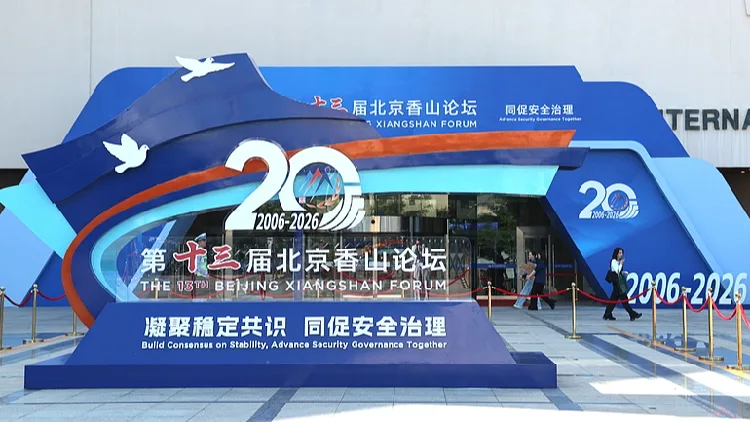
His research interests include East Asian international relations and China-US relations.The ongoing 13th Xiangshan Forum held a plenary session where international experts and officials exchanged views on the risks and challenges to security and stability in the Asia-Pacific.
The article states that long-term stability in the Asia-Pacific depends on managing differences and building trust through dialogue, crisis management and practical cooperation, rather than confrontation.
It reflects the author's opinions and not necessarily those of CGTN.
Although no wars have broken out in the Asia-Pacific region in recent years, the region has faced a range of security challenges.
Risks in the Taiwan Strait have risen, security tensions between China and Japan have deepened, the Korean Peninsula nuclear issue remains unresolved, and friction in the South China Sea continues to recur.
Meanwhile, countries have increased defense spending, moved military deployments forward, strengthened alliances, and stepped up naval and air activities.
The region has gradually fallen into a security dilemma.
All parties have increased investments in their own security, yet the region's overall sense of security continues to decline.
The root of this situation lies in the highly diverse security concerns across the Asia-Pacific, and the lack of a basic consensus among the parties regarding the sources of threats and security boundaries.
China prioritizes national reunification, territorial sovereignty and stability along its periphery.
The United States seeks to maintain its military superiority and alliance system in the region.
Japan is concerned with the situation in the East China Sea, its Southwestern Islands and the Taiwan Strait.
The Democratic People's Republic of Korea (DPRK) emphasizes regime security and strategic deterrence.
此摘要由5News从媒体的公开信息源汇聚而成。 包含完整背景的全文在www.cgtn.com — 内容归CGTN Politics (oficial)所有。