Dinner, then a walk: China's evening ritual

In China, dinner doesn't always mark the end of the day.
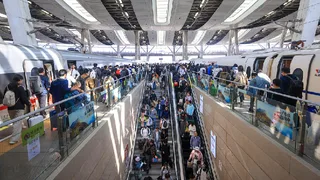
As the evening cools, people begin heading outside.
Couples walk through their neighborhoods.
Parents take children to nearby parks.
Older residents stroll together, while others walk alone, taking a few laps around a familiar route.
It can look like exercise, but it doesn't always feel like it.
For many people, the evening walk is simply part of what happens after dinner.
Why walk after dinner? There is a familiar Chinese saying: 饭后百步走,活到九十九 — "Walk 100 steps after a meal and live to 99." The "100 steps" is not meant to be taken literally.
Rather, the saying reflects a long-standing belief that gentle movement after eating is good for the body.
Some Chinese health guidance has traditionally linked a slow post-meal walk with digestion, while warning against strenuous exercise immediately after eating.
Traditional Chinese medicine also offers an explanation for the practice, linking gentle movement with the health of the digestive system.
Beijing's Traditional Chinese medicine authorities have described slow walking after a meal as a way of supporting digestion, while emphasizing that "walking 100 steps" means gentle movement rather than vigorous exercise.
Modern research offers some support for the broader idea.
A 2023 systematic review and meta-analysis looked at eight randomized controlled trials involving 116 people and found that exercise after eating reduced post-meal blood glucose more than exercising before a meal or remaining inactive.
此摘要由5News从媒体的公开信息源汇聚而成。 包含完整背景的全文在www.cgtn.com — 内容归CGTN China (oficial)所有。