Chinese scientists discover that trees are producing ozone smog in Beijing
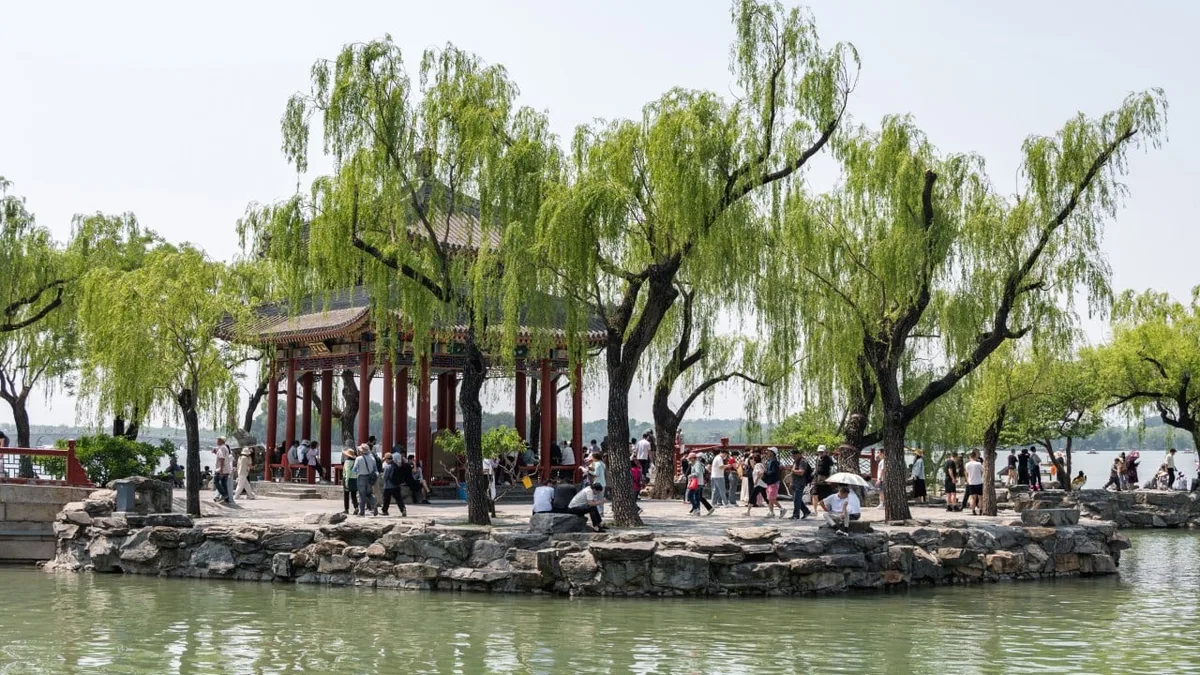
The city’s poplars and willows have been identified as the source of an unexpected spike in ozone levels during the heat of the summer
Beijing’s hundreds of thousands of weeping willows and poplars have been a welcome source of shelter from the fierce summer sun for more than four decades – but they may also be an unexpected source of pollution, according to new research.
Scientists warned that this urban greenery may be “choking” the Chinese capital’s 20 million residents by increasing the levels of ozone in the city’s air.
Smog caused by the ozone released by car exhausts has been recognised as a public health problem since the 1940s, with some severe incidents known to have killed hundreds of people.
Beijing’s ozone levels had puzzled researchers because many cars in the city have gone electric, but they have now identified the compounds released by the trees as the most likely culprit.
An international team led by scientists from Jinan University in Guangzhou initially intended to measure how human activities generated ozone pollution – but they soon discovered that the trees in Beijing generated far more smog than expected, according to research published in the journal Science Advances.
This is because they produce unusually high levels of isoprene, a volatile organic compound (VOC) that produces ground-level ozone when it reacts with the nitrogen oxide typically produced by vehicles or factories.
此摘要由5News从媒体的公开信息源汇聚而成。 包含完整背景的全文在www.scmp.com — 内容归South China Morning Post - China所有。