What masculinity really means

Account subscription benefits alongside Premium Stories, Editorials, Opinions and more. Unlock these with Subscription
Last week the internet was split, as usual, on what was served at the BRICS banquet hosted by the Prime Minister, with one group saying we are a meat-eating country with great food diversity, which had gone unrepresented. The meat-eating group also went on to talk about how if the PM had a wife the menu would have been better. One woman also said a diplomat’s wife would have done a stellar job of menu setting.
This gender-fication of roles – woman as menu-setter, man as diplomat – ties both genders to poles they may not want to be tethered to. Setting a menu or diplomacy are both skills that don’t come with little blue and pink tags attached to them.
A survey in India by the Harvard Center for International Development found that boys were brought up to believe that their “worth as a man” depends on their “ability to provide, to be strong, and never to show pain.” The results of the survey, ‘Beyond the Manosphere: What Young Indian Men Actually Want from Masculinity,’ were published in August 2026. It also found that “in an economy where youth unemployment has doubled in a generation and where stable jobs are increasingly out of reach,” rigid norms are creating a taut, tense society. Men between 15 and 29 reported feeling “down, depressed, or hopeless”.
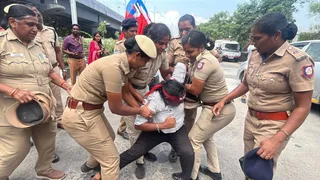
But here’s the thing: “Most men surveyed privately desired a more expansive vision of masculinity.” Not the sort of masculinity of entitlement that asks 1.4 billion people (or more if you count zealous NRIs) to celebrate your birthday by lighting a lamp, as the Prime Minister asked us to do. Not the sort of masculinity of aggression that deliberately runs women off roads, as the man in a Gurugram car did to a woman on a bike. Not the sort of masculinity of menace that physically clamps down on a woman protester, as Steven Kolb, the president and CEO of the Council of Fashion Designers of America, did at a New York Fashion Week show.
All of this goes back to how we bring up boys, what behaviours and practices we reward, and what we expect from them in return for putting them at the centre of the universe. How do we change the idea of masculinity as physical and economic muscle?
By addressing this at all levels of society: parents, teachers, workplaces, even governments. At home, let’s give both girls and boys equal access to dolls and balls, let’s hold boys when they cry, let’s tell them that no matter what they choose — finance or fashion — we are with them, we are proud of them.
They are not our old-age insurance policies to be taken for granted. Nor are they to be sold to the highest bidder in the marriage market. They set the table, put their family’s clothes for a wash, and buy onions and potatoes from the vegetable vendor. Only then will women and men see each other as equal participants in the home and in the world.
But also, for us in the media to capture narratives of men who are allies, who champion their daughters as they do their sons, who stand by the women in their lives as they break the norm.
5News aggregated this summary from the outlet’s public feed. The full article, with all the context, is on www.thehindu.com — the content belongs to The Hindu.