PCOS name change to PMOS to lead to a holistic approach, involve more disciplines: Prof. Terhi Piltonen
Account subscription benefits alongside Premium Stories, Editorials, Opinions and more. Unlock these with Subscription
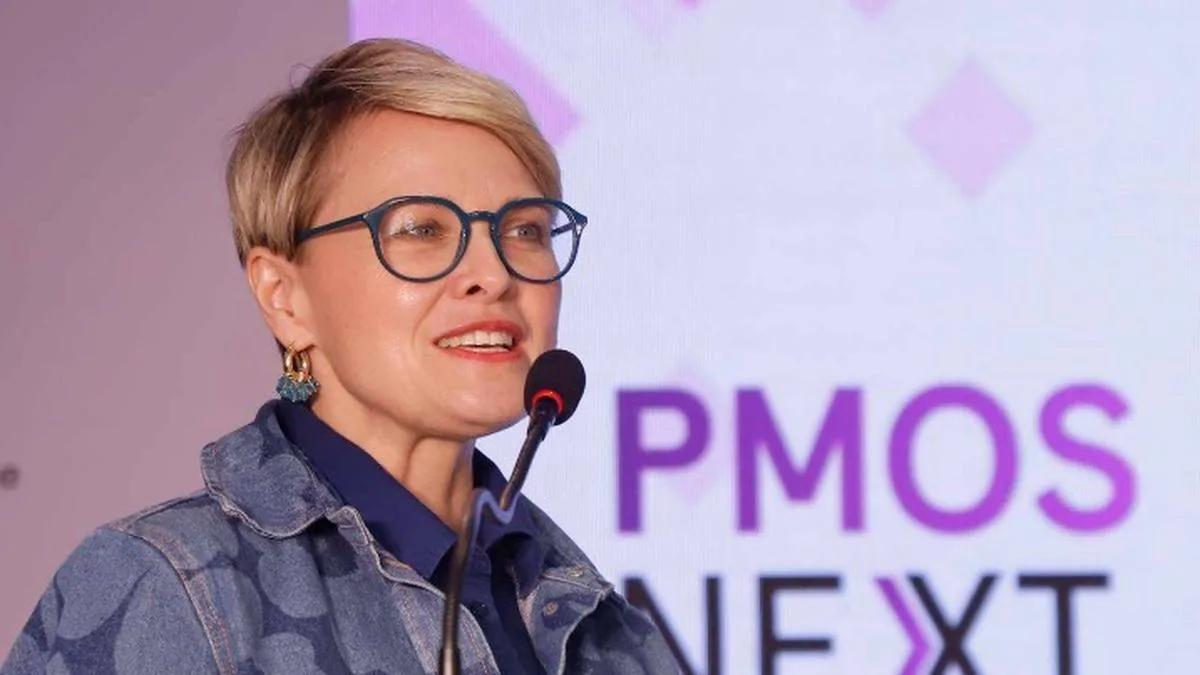
Professor Terhi Piltonen in an event in New Delhi on September 10 | Photo Credit: Special arrangement
Earlier this year, Polycystic Ovary Syndrome (PCOS) which affects one in eight women worldwide, was renamed Polyendocrine Metabolic Ovarian Syndrome (PMOS) by the Endocrine Society.
A global consensus article published in the Lancet in May, led by Professor Helena J. Teede, argued that the name reduced a long-term hormonal and endocrine disorder to focus on ovaries and cysts, leading to inadequate treatment, or fewer people getting diagnosed with the condition.
Professor Terhi Piltonen, president of International Androgen Excess and Polycystic Ovary Syndrome Society (AE-PCOS Society), and also one of the co-leads of the Lancet publication, from Oulu University Hospital, Finland, in conversation with The Hindu speaks about the name change, and its implications on patients, treatment plans, and research.
Can you tell me about the process of renaming the syndrome from PCOS to PMOS?
It was sustained work over 14 years that eventually led to the name change. Earlier, there were some individual opinion papers. There were fifty-six societies were invited to be part of the whole process. And about one hundred persons represented these organisations, the patient organisations, and healthcare professionals.
We had meetings where we narrowed down on the different opinions, and we had to take into consideration many different aspects; cultural aspects, acceptability, and adaptability to understand how is it that we want it to change the life of these women. It's been a long process, but the last bit of the process took around two years.
We are now thinking about it in a more holistic way; not only looking at the ovary, but also looking at how it affects the mood, the psychological profile, the metabolic profile and also the menstrual cycles. And I think I'm hoping that with the new name, we will now understand that this is a whole-body syndrome.
We know how to manage it, but the name change emphasises how we need to listen to the patients and take a more holistic view and invite other disciplines to play their part.
The women need the opportunity to be asked about their mental health issues, weight management, their skin, their quality of life, how they manage at work, and when they would like to conceive so that we can anticipate how they can have overall good health.
There is a three-year overlap period where we are going to put in the codes for PCOS and PMOS while researching and eventually we will transition to using PMOS.
But of course, I am hoping that we'll see more diverse studies, for example my colleague who is an endocrinologist or in internal medicine, or a dermatologist, might take an interest in researching certain parts of the condition. So far, it was only OB-GYNs who were diagnosing it. But I think that others might acknowledge their work in seeing PMOS.
Is it also monetarily challenging to conduct research in an area that impacts women, and not men?
5News aggregated this summary from the outlet’s public feed. The full article, with all the context, is on www.thehindu.com — the content belongs to The Hindu - Sci-Tech.