Unlimited health insurance explained: Exclusions, waiting periods - 5 things you must check before buying a policy
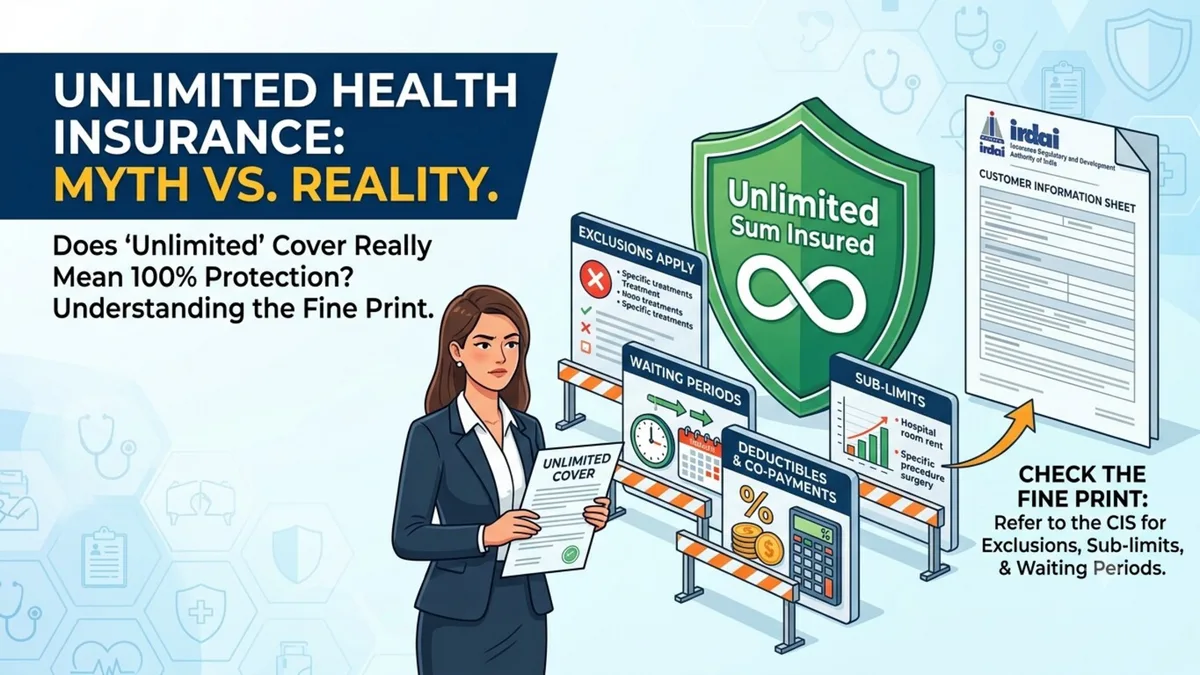
While the term "unlimited health insurance" sounds like an all-inclusive shield against medical bills, it rarely means your insurer will cover 100% of every claim. In practice, "unlimited" usually applies only to the total sum insured or specific benefit limits, not the entire scope of care.
The actual protection available depends on the terms and conditions of the policy, including its coverage, exclusions, waiting periods, deductibles, co-payments and sub-limits.
A conventional health insurance policy generally comes with a specified sum insured, which represents the maximum amount the insurer will pay for eligible claims during the applicable policy period.
With an unlimited cover, the overall sum insured may be removed or substantially increased, depending on how the product has been designed. Such a feature can be useful when a policyholder faces exceptionally high treatment costs or needs to make multiple eligible claims during a policy year.
However, a higher or unlimited sum insured does not override other policy conditions. The Insurance Regulatory and Development Authority of India (IRDAI) requires insurers to provide important information such as coverage, exclusions, sub-limits, deductibles and waiting periods in the Customer Information Sheet.
This is one of the most important points policyholders need to understand. A health insurance policy does not become all-inclusive merely because it offers an unlimited sum insured.
An exclusion means that a particular disease, treatment, service or circumstance is outside the scope of the policy. Therefore, an expense can remain excluded even under a plan that advertises unlimited coverage.
IRDAI has also required insurers to offer products and add-ons that provide wider choices, including coverage options for areas such as outpatient treatment, homecare and domiciliary treatment. However, this does not mean that every policy automatically includes all such benefits. Policyholders may need to purchase suitable add-ons or riders for additional coverage.
An unlimited sum insured does not remove waiting periods. IRDAI's current health insurance information states that the maximum waiting period under a health insurance policy should not exceed 36 months. Policies may also prescribe specific waiting periods for certain diseases, treatments or procedures.
Therefore, buying a policy with unlimited coverage shortly before undergoing planned treatment does not necessarily mean that the entire cost will be covered.
Policyholders should carefully examine the waiting-period provisions, particularly those relating to pre-existing diseases and specified treatments, before purchasing a plan.
Unlimited coverage also does not necessarily mean zero out-of-pocket expenses.
A policy can have a deductible, under which the policyholder has to bear a specified amount before the insurer's liability begins. Similarly, a co-payment clause requires the insured person to pay a specified percentage of an admissible claim.
Sub-limits can further restrict the amount payable for specific treatments, services or circumstances. These conditions operate separately from the overall sum insured.
5News aggregated this summary from the outlet’s public feed. The full article, with all the context, is on www.livemint.com — the content belongs to LiveMint - Money.